
The Environmental Costs of War


What’s in this week’s newsletter:
The environmental and energy costs of the Iran war
China’s ‘cautious’ emissions reductions in its new 5-year plan
Climate is a leverage point in the California gubernatorial race
Fossil fuel multinationals battle activist shareholders
ISSB’s global adoption accelerates
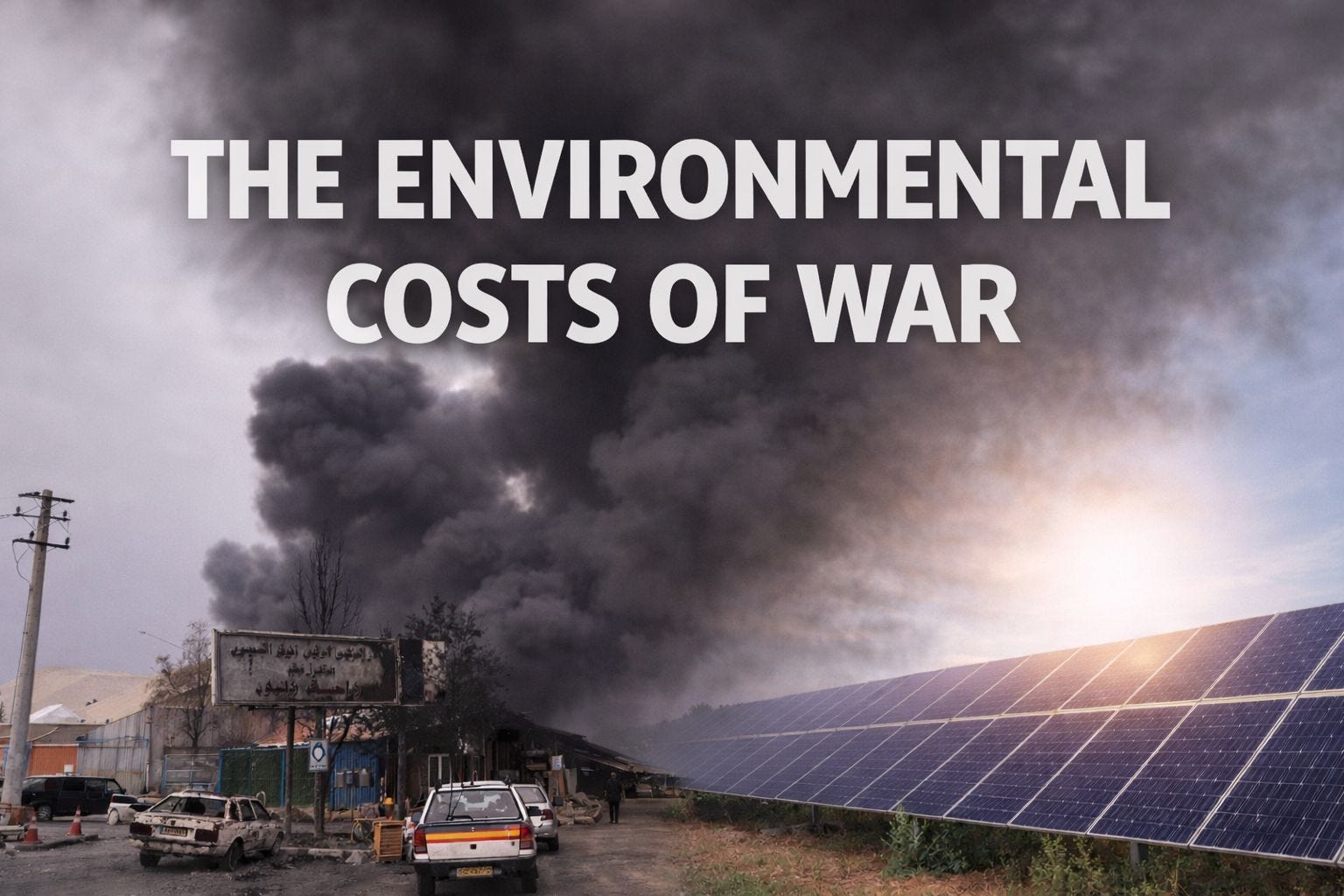
There is a clear and devastating human cost in the war with Iran, which we will leave to others to cover. Not to minimize these tragedies, there are also massive environmental implications emerging as the war nears its third week. Blackened skies, blocked oil and gas exports, and burning merchant ships are contributing to an ecological disaster and “the largest supply disruption in the history of the global oil market.”
After missile strikes hit four oil depots around Tehran, day turned to night as black smog filled the skies. Oily “black rain” fell from the sky, coating everything it touched and causing acute health issues for residents. Iranian spokesperson, Esmaeil Baqaei said, “hazardous materials and toxic substances into the air were endangering lives on a massive scale.” Long-term health and grave ecological implications are likely to follow in the region, both in Iran and beyond.
Tankers passing through the Persian Gulf and the Strait of Hormuz are under attack, increasing the risk of oil spills. Five such attacks have been confirmed so far, resulting in chemical and oil spills. Desalination plants are also being targeted in this water-stressed region, raising the specter of severe freshwater shortages.
Since nearly a fifth of the world’s oil supply transits the Strait of Hormuz, its blockage is causing havoc in global energy markets - spiking oil prices to as much as $120 (up from around $70). In response, the International Energy Agency is requiring its 32 members to release a record 400 million barrels of their strategic oil reserves.
Some are leveraging this situation to make a case for renewable energy: The Global Renewables Alliance (GRA) issued a five-step policy plan to avoid future price shocks. GRA CEO, Bruce Douglas, said: “Without action, they [countries] will continue to be dependent on petrostates and will remain exposed to supply risk and volatile global market prices.”
Climate journalist and activist Bill McKibben says solar offers a war-proof alternative to fossil fuels with this priceless quote: “sunlight travels 93 million miles to reach Earth. None of them through the Strait of Hormuz.” Microsoft’s global energy leader, Bobby Hollis, also says this furthers the case for renewables, arguing, “Wind and solar are always important, whether it’s a time of conflict or a time of fuel scarcity.”
This war is yet another example of the vulnerabilities of the fossil fuel supply chain. Similar to the shock of the Ukraine war, which forced Europe to diversify its energy mix, this war will likely renew interest in renewable sources to bolster energy independence. European Executive Vice President Teresa Ribera said that the “answer is not new dependencies, but faster electrification, renewables, and efficiency. The clean transition is Europe’s shield against volatility.”
2. Climate Impacts of China’s Five-Year Plan
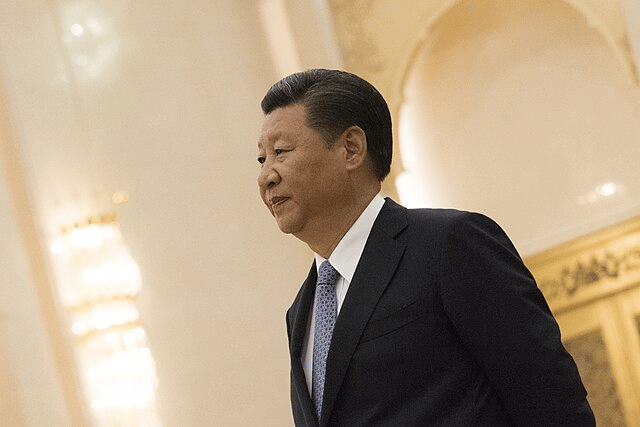
China’s President Xi Jinping
For China, the oil and gas price fluctuations, like those from the Iran war, are one of the main reasons they have pursued a domestic clean energy build-out. China expert Lauri Myllyvirta said, “This kind of disruption is exactly what has driven China’s energy security approach and strategy over the years.” However, it is also the reason they have continued to embrace their domestic coal sources.
In their 14th five year plan released last week, both of those trends are likely to continue. China projects that its coal production and use will continue to grow, driven by “hard-to-abate” industries. It also released a “cautious” 17% emissions-intensity reduction goal – total emissions divided by China’s GDP – a percentage point below the goal in its last five-year plan, which it missed by 6%. Most climate advocates hope they will “underpromise and overdeliver” on the new goal.
The plan leaves some wiggle room for China’s emissions to increase slightly over the next 5 years and walks back some previous pledges to reduce coal consumption. However, through new minimum quotas for renewable energy use and the updating of inefficient coal technology, China’s Premier Li Qiang says it still allows the country to reach its goal of carbon neutrality by 2060 and reach peak emissions between now and 2030.
3. California Governor Race Could Hinge on Climate
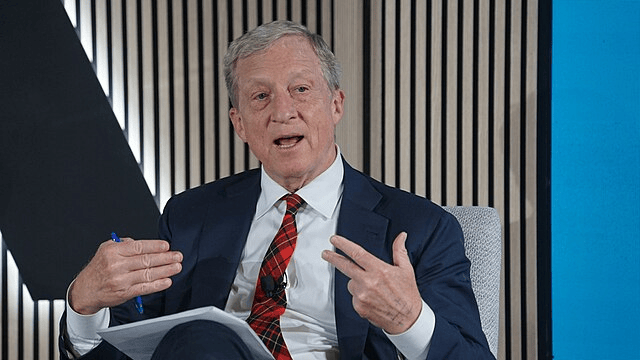
California Governor hopeful Tom Steyer
As the most populous and wealthiest state, California's race for Governor is one of the most important in the country. Given the state’s progressive posture, the Governor has an outsized influence on environmental policies - often with national and global implications. With the state currently under an early heatwave pushing temperatures close to 100°F and still reeling from last year’s Los Angeles wildfires, climate is a flashpoint in the election.
Vying to replace Governor Gavin Newsom are eight hopefuls who have a series of climate flashpoints to contend with:
Deciding how to fund adaptation measures in the face of growing wildfire risk.
Deciding how to fund the recovery from wildfires. Currently, utility companies are liable even if they are not at fault, which is pushing up already high energy prices.
One of the front-runners, Democrat billionaire and climate advocate Tom Steyer, is running on the promise that “climate polluters and shareholders, not taxpayers and consumers, should pay to address the effects of climate pollution.” The primary vote will be on June 2nd.
4. Fossil Fuels vs. Shareholders
The US Securities and Exchange Commission (SEC) was forced to stop reviewing shareholder proposals - ostensibly due to a government shutdown and lack of staff. That has not stopped fossil fuel giant Exxon from filing a motion to redomicile from New Jersey to Texas to benefit from more “reasonable, productive decisions.” Texas is known for having a more laissez-faire attitude toward regulations around corporate governance, which is a state legislative issue. The move comes as Exxon faces an investor-led lawsuit over its automated proxy voting system, which shareholders say limits voting rights.
In Europe, Dutch shareholders threatened BP with a lawsuit over what they say is an “unprecedented attack on shareholder rights” prompted by BP’s refusal to include a resolution in next month’s annual meeting. The proposal called on the company to set out strategies for maintaining shareholder value if oil and gas demand declines. The Dutch green investor group - Follow This - collaborated with 16 institutional investors and a group of retail shareholders to file the resolution. CEO, Mark van Baal, said: “BP is trying to silence its own shareholders rather than answering them.”
5. Mandatory Sustainability Reporting Accelerates
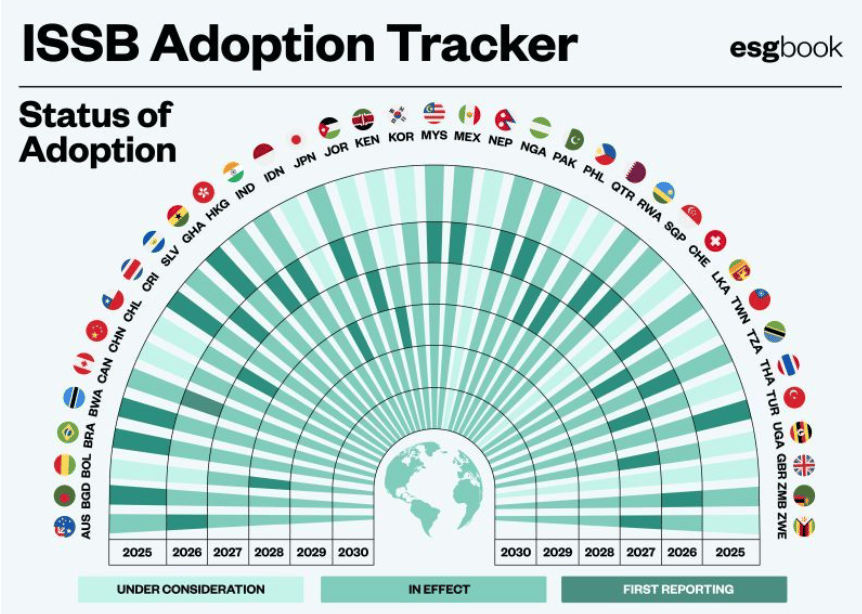
The infographic above from ESG Book has been going viral on social media. It does a nice job of showing the adoption of the standards from the relatively new International Sustainability Standards Board (ISSB).
Just a couple of weeks after the UK published its ISSB-aligned standards, South Korea released its roadmap for mandatory ISSB-aligned reporting for listed companies - phasing in starting in 2028.
Even as regulatory pressure eased in Europe, a new survey from Osapiens found that 90% of European companies removed from the Corporate Sustainability Reporting Directive (CSRD) under the EU’s Omnibus still plan to continue or expand sustainability reporting.
The views expressed on this website/weblog are mine alone and do not necessarily reflect the views of my employer.
Other Notable News:
Sustainability Articles
ISSB
Corporate Climate Wins
Trump 2.0
Energy Transition
Notable Podcasts:
In the last edition of the Outrage and Optimism podcast, the hosts ask who will pay for climate change? They talk to Indonesia’s finance minister, Sri Mulyani Indrawati, who explains how countries like Indonesia, one of the world’s largest coal producers and exporters, are trapped in contracts that slow down the energy transition.
In this week’s episode of S&P Global’s All Things Sustainability podcast, the theme is how the GHG Protocol standards are evolving. It features an interview with the GHG Protocol Global Director, Pankaj Bhatia, who talks through how the GHG Protocol is working to update its Scope 2 guidance and Scope 3 standard with help from partners ISO.