
The Sustainability Rules No One Is Talking About: EPR


What’s in this week’s newsletter:
Extended Producer Responsibility (EPR) regulations are expanding across US states
Europe attempts to continue decarbonization despite energy pressure
China looks toward dominating a clean future
The 1.5°C reality shift
Cleantech Investors look for payback, target right-wing politicians
A series of recent court cases has shed light on a recent sustainability trend that has been quietly sweeping across the US - Extended Producer Responsibility (EPR) rules.
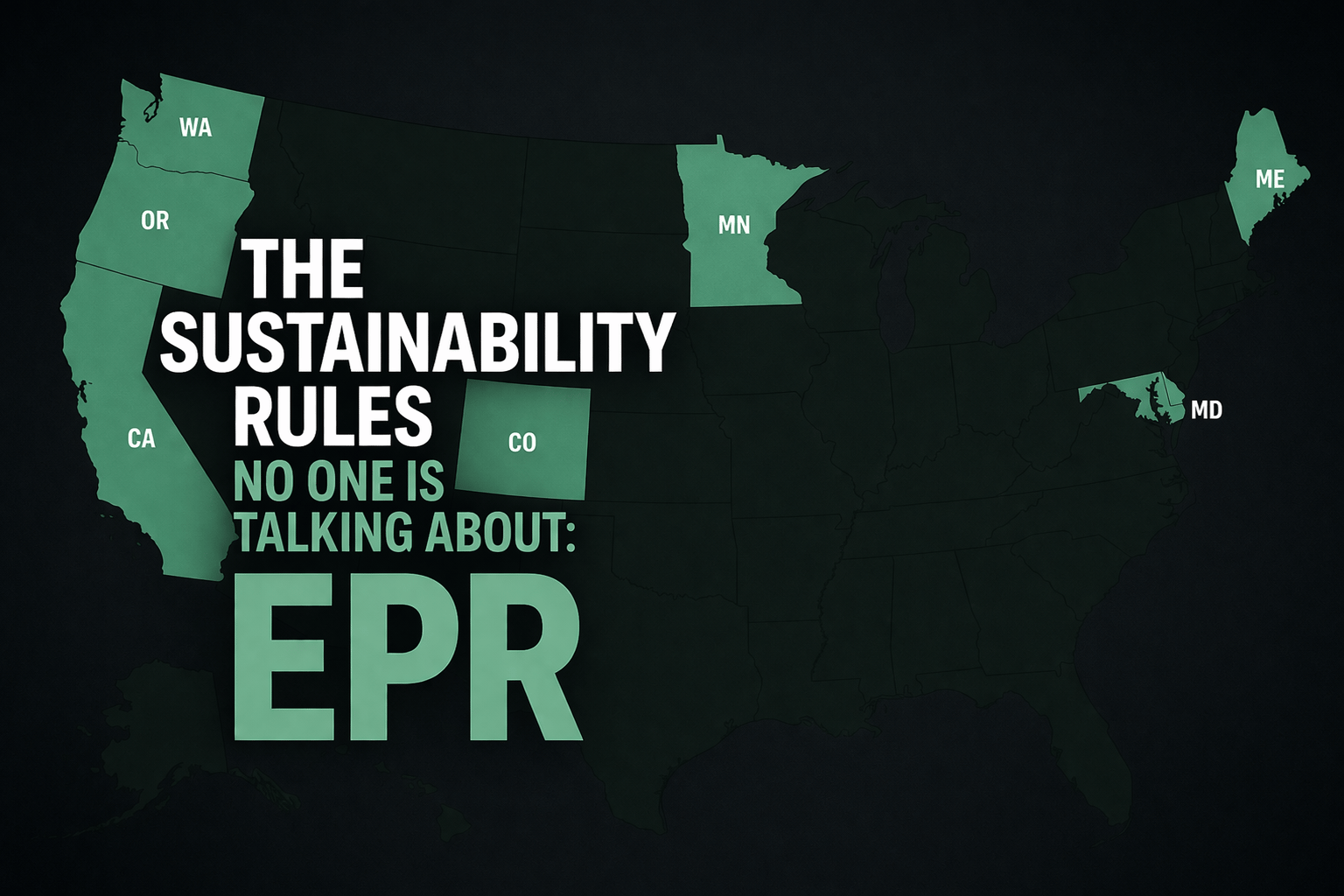
The goal of EPR rules is to reduce waste by requiring producers to take responsibility after the consumer-use stage. Currently, there are seven states with EPR rules, and around a dozen more that are considering similar ones.
California’s EPR rule (SB 54) - which aims to remove 25% of plastic - gets most of the airtime due to the size of the state economy. But it was Maine that enacted the first EPR rule (LD 1541) in 2021, and Oregon (SB 582) that created the blueprint by which all subsequent rules (Colorado, Maryland, Minnesota, and Washington) copied, with slight nuances in the timeline, covered companies, and covered products.
Each of these EPR schemes requires an “obligated producer” - which could be the brand, a manufacturer, or an importer of covered products (e.g., packaging, paper, electronics, apparel, etc.) - to sign up to a Producer Responsibility Organization (PRO). The PRO acts on behalf of the covered companies to achieve the goals of the policy. Every year, the obligated producer reports the amount of covered products sold in the state and pays a fee per unit.
Companies can reduce their fees by implementing “eco-modulation,” which means producing fewer covered materials, increasing post-consumer recycling rates, and adopting other sustainable practices. California's SB 54 goes further than other states by requiring that 100% of single-use packaging be recyclable or compostable by 2032. Each state has specific exemptions for small businesses that produce waste below a certain threshold.
A huge problem for companies is that they sell into several states with inconsistent EPR rules. While they all have common goals, they vary in covered products, exemptions, penalties, fee systems, and reduction methods. For example, California’s rule covers single‑use packaging and single‑use plastic food serviceware, whereas Oregon’s rule covers packaging, printing, and writing paper, and food serviceware. In practice, it’s difficult for companies to design reduction strategies to satisfy all the state EPR rules.
With fees coming online this year in Colorado, California, and Oregon, these issues are about to have material impacts on many companies. And right behind these early states are new EPR schemes in the coming years:
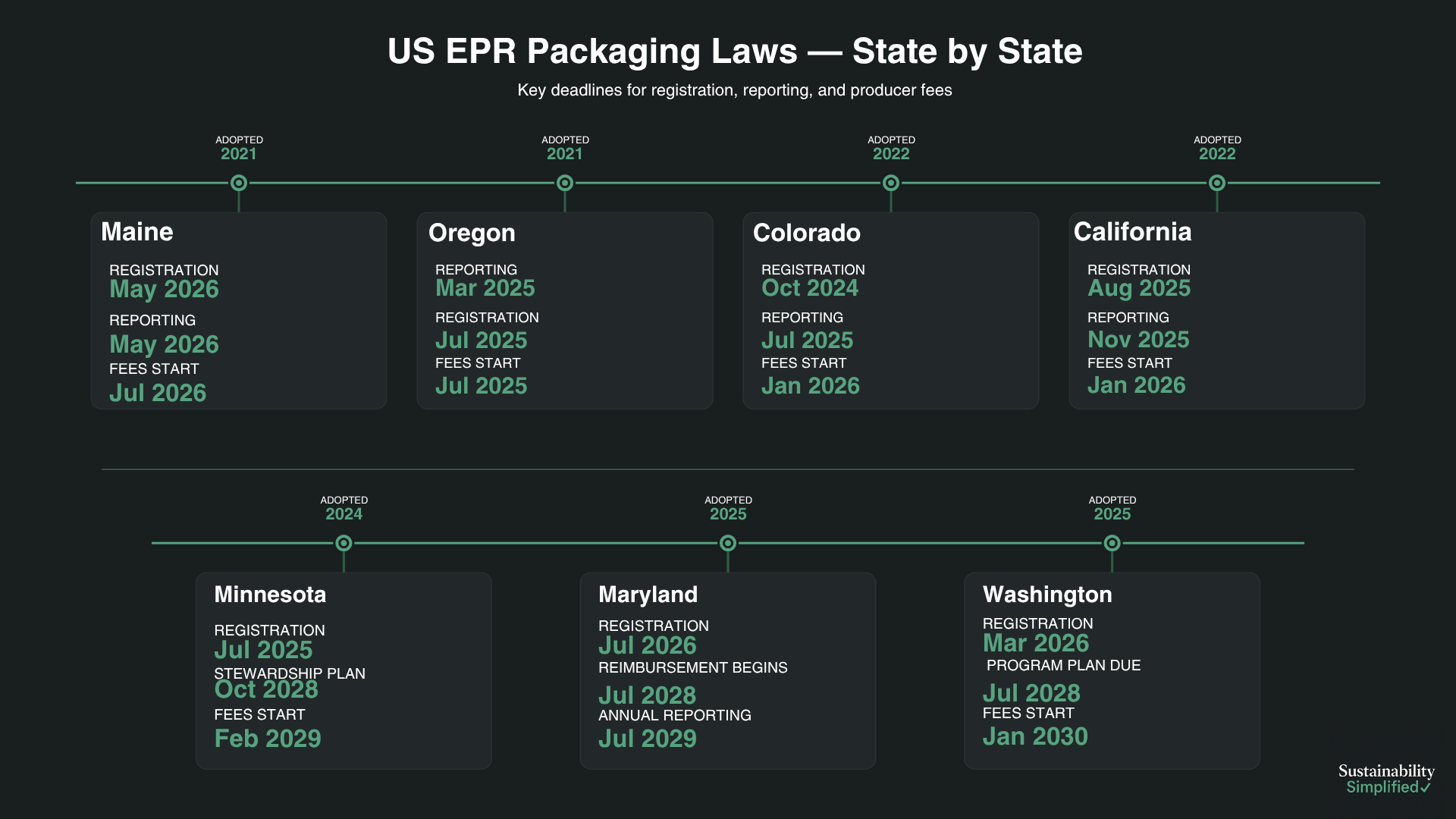
EPR rules are expanding beyond packaging into other materials. California’s SB 707, which is virtually the same policy for packaging, is focused on apparel and aims to tackle textile waste in the era of ‘fast fashion.’ Other states across the US are developing EPR schemes for paint, batteries, and a multitude of other products.
The spread of EPR rules has prompted new legal challenges. Just last week, a court ruled California’s recycling labeling policy unconstitutional under the First Amendment. A court injunction froze Oregon’s EPR rule, and another lawsuit was filed this week against Colorado’s EPR policy. These lawsuits add even more uncertainty on top of an already complex compliance picture. And, unlike climate reporting rules, EPR policies require fees and fines that can add up to millions for each company.
2. Despite Energy Shock, European Sustainability Rolls on
To contend with the energy crisis brought on by the war in Iran, Brussels is calling on Europeans to drive less, and is considering conservation measures similar to those used during the first days of the Ukraine war in 2022. Despite the shock, leaders have so far balked at any significant changes to the EU’s Emissions Trading System (ETS) or carbon border tariffs (CBAM) and only plan to temporarily increase the supply of pollution permits and limit price increases. Austria and Italy continued pressure to weaken the ETS, and France is lobbying to remove fertilizer from the carbon border tariff.
The energy crisis has also not hampered Europe from officially adopting its ambitious 90% emissions reduction target by 2040, issuing new packaging waste guidance, and announcing a bilateral climate agreement with Japan.
3. China Leverages Its Clean Tech Advantage

Chinese clean energy and EV companies are likely to be the biggest beneficiaries of the global oil shock. China’s rapid energy transition has made it less reliant on energy imports, which has shielded its manufacturing sector while competitors have been forced to close factories or limit output.
This has created a virtuous cycle where greater energy independence allows China to further increase its global lead across sectors. As some Asian economies turn to domestic coal as the safest fuel in the face of the Iran war, China is leveraging the crisis to incentivize a switch to clean grids in coal-rich countries like Indonesia.
In addition, China adopted its new Ecological and Environmental Code this month. More than 1,200 articles across five chapters cover pollution control, low-carbon development, and ecological protection, as well as new, more stringent legal protections. The code aims to ensure that China can meet its decarbonization goals, reduce pollution, and continue to grow.
4. 1.5°C Pragmatism
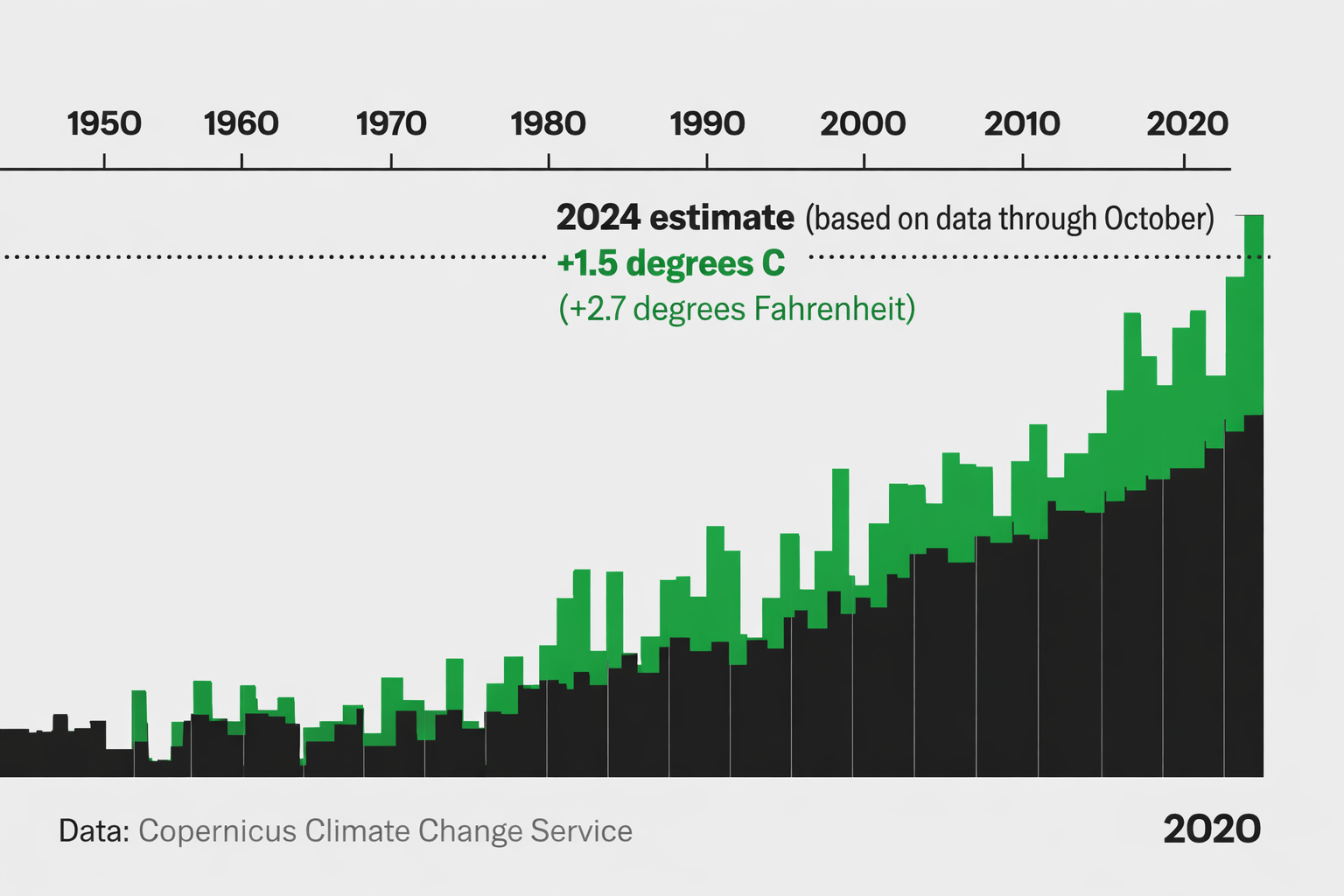
As emissions continue to climb and temperatures continue to rise, many companies and investors are coming to terms with the fact that the 1.5°C global average temperature rise goal of the Paris Agreement will be missed.
This week, French energy multinational TotalEnergies announced in its 2026 sustainability report that it would be dropping its 1.5°C target, as the scientific consensus is that the goal is out of reach. TotalEnergie’s CEO Patrick Pouyanné claims the company “must confront ambition with reality and acknowledge that our societies have embarked on a transition, but at a pace that does not yet allow for the collective achievement of carbon neutrality as pursued under the Paris Agreement.” TotalEnergies will, however, continue with its goal of being carbon-neutral by 2050.
Also, this week, one of the UK’s largest pension funds, the People’s Pension, said it was halting its portfolio alignment with 1.5°C because the target is “inconsistent with the real world.” Instead, the £40 billion ($53 billion) fund will maintain a Paris-aligned goal of aligning its portfolio with a “well-below-2.0°C” target.
5. Political Brawl Erupts Over Renewable Energy
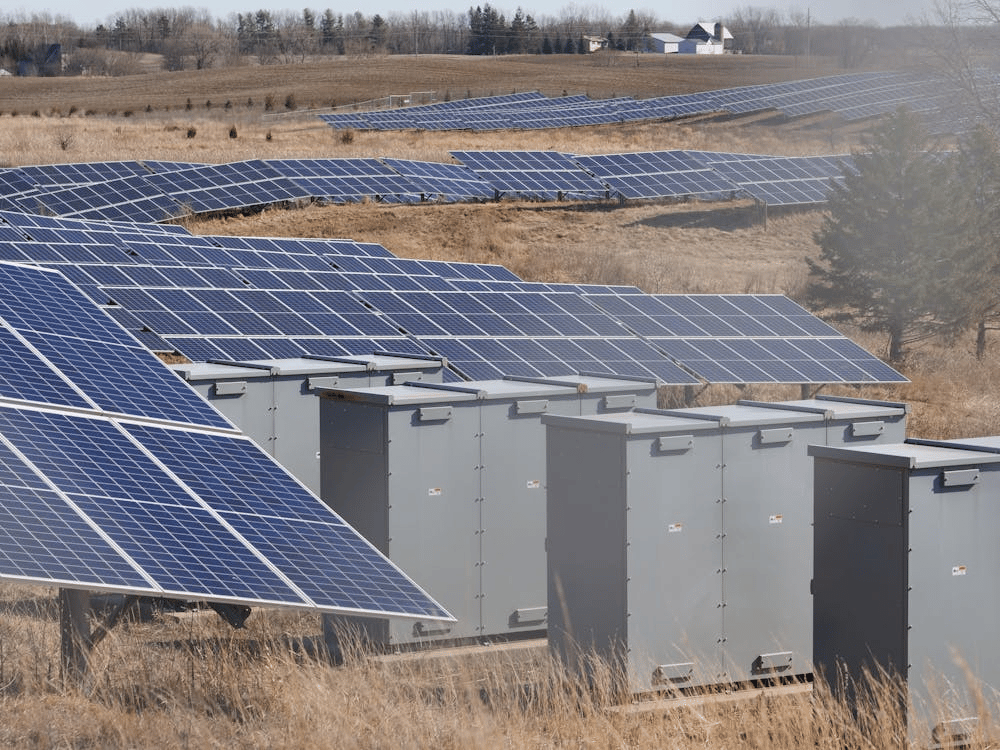
After losing billions due to the Trump Administration's rollbacks of renewable energy subsidies and other clean tech policies, investors are going on the attack, targeting their foes and bankrolling election challengers.
“You’ve got to have some fear that if you vote against the clean energy industry, you may pay a political price,” said Michael Brune, a former head of the Sierra Club.
Taking a more diplomatic approach, Ceres CEO Mindy Lubber says that focusing on good jobs, affordability, and competitiveness, rather than climate risks and emissions, is most likely to bring both Republicans and voters back to the side of renewable energy.
The views expressed on this website/weblog are mine alone and do not necessarily reflect the views of my employer.
Other Notable News:
Global weirding
Climate litigation
Sustainability standards
This week, ahead of the expected release of a nature-related standard later in the year, the ISSB provided incremental guidance on nature disclosures for transition plans and targets and agreed that companies can use other standards, such as the Sustainability Accounting Standards Board (SASB) standards, to report on nature-related metrics.
Environmental Policy
Energy Transition
Company Moves
Notable Podcasts:
In this week’s episode of the Outrage and Optimism podcast, the hosts discuss how extreme weather has become background noise and how increased mass flooding barely hits the headlines anymore. They also talk about whether the only way action happens is when flooding accelerates in the developing world.
The most recent episode of the Two Steps Forward podcast, from Joel Makower and Solitaire Townsend, is all about the new generation of sustainability workers. They speak with three early-career professionals about breaking in, building influence, and navigating the realities of corporate sustainability.