
Reasons for Hope


What’s in this week’s newsletter:
Positive environmental trends cut through the doom and gloom
ISSB votes down single nature standard
Europe accelerates response to Iran energy shock
The Greenhouse Gas Protocol floats another carbon accounting standard
Environmental groups sue oil and gas majors
With Earth Day (April 22nd) this week, this NYT article covering hopeful environmental trends, and the recent Artemis II moon flyover (as used in today's image), I started to feel the rumblings of optimism and hope for the future.
We all live with the daily barrage of stressful news about conflict, attacks on science, and backtracking on sustainability, yet there remain so many reasons to be hopeful and so much worth fighting for.
In recognition of Earth Day and in hopes of inspiring you, dear reader, here is a somewhat surprising summary of this year’s continuing progress to become a more sustainable society.
Energy Transition
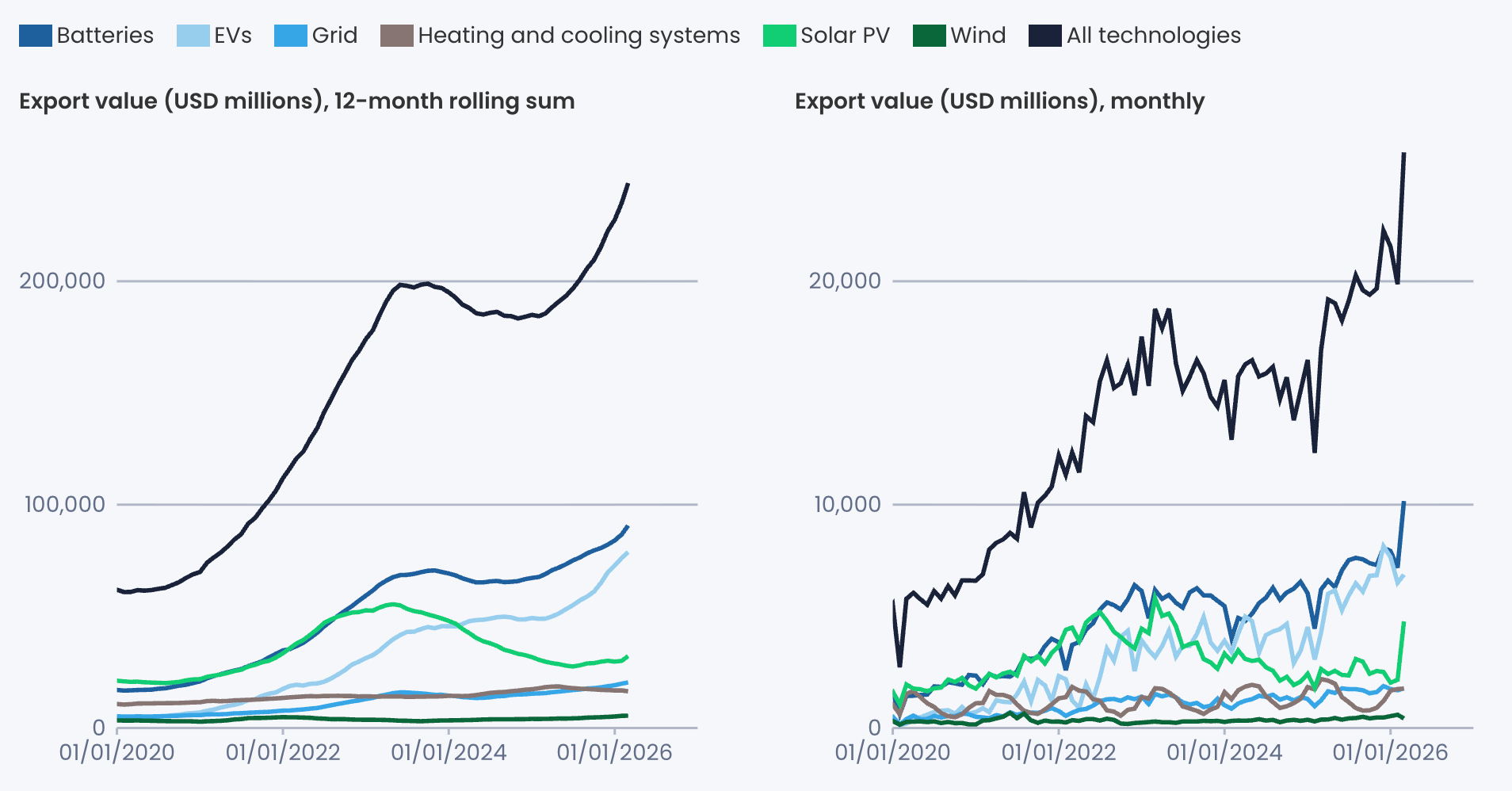
March was a hockey stick month for Chinese clean tech
The NYT article pointed to progress in reducing emissions in some areas (EU, UK) and flattening in others (China), and to an International Energy Agency (IEA) report showing, for the first time, that renewable energy was the single largest source for meeting new economy-wide energy demand. Solar power accounted for 25% of new global energy demand, followed by gas; in total, renewable sources, including nuclear, met 60% of new demand.
A new report from Ember, supports the IEA findings. Ember’s report looked at new demand growth at the electrical grid level and found that 75% of demand growth was met by solar power in 2025. Aditya Lolla, interim managing director at Ember, said low-carbon electricity was “scaling fast enough to absorb rising global electricity demand,” adding that momentum is now locked in as a “structural reality.”
Not surprisingly, another Ember report also showed that China’s solar exports reached a record $21.9bn in March 2026, 70% higher than in March 2025. Last month was a record month for Chinese clean tech across all categories (see graph above), likely due to the Iran oil shock. EV car sales are also surging in places like Europe, where oil prices increases from the Iran war have caused a 51% spike in sales.
Corporate Action
While some have backtracked, the majority of companies are continuing or accelerating work on sustainability. especially as the business case becomes clearer.
Last week, we shared that the number of companies with science-based net-zero targets jumped 40% in 2025. This week, a new survey of 7,000 companies from G7 countries found that 69% increased net-zero spending in 2025, and 75% believe net zero is important for their business. However, they are framing their communication in terms of resilience and risk mitigation.
Ceres CEO Mindy Lubber said, “This isn’t a straight line, and it’s definitely not fast enough, but overall, the direction is clear: markets, companies, investors, and policymakers are still moving forward.”
Global Regulations and Standards
While the US federal government has swung toward retrenchment, sustainability regulations are expanding elsewhere. US States are moving ahead with climate reporting and extended producer responsibility rules. On a global scale, the International Sustainability Standards Board (ISSB) has been adopted by capital markets around the world. And despite the recent simplification efforts, Europe continues to lead in sustainability - from emissions trading, ethical sourcing, carbon tariffs, producer responsibility, and disclosure - the EU has a policy for each.
A new report released this week by my company, BCG, paints four contrasting scenarios for 2050, showing what could be possible under more positive scenarios of international climate collaboration and AI abundance. The decisions we make over the next five years as voters, leaders, and companies will determine the next 25.
As sustainability professionals, it's critical that we keep our eyes on the horizon, be resilient, and continue to drive progress. For more inspiration, watch the late, great Carl Sagan’s “Pale Blue Dot” speech.
2. ISSB Votes Down Nature Standard
At an Earth Day meeting in Beijing this week, the International Sustainability Standards Board (ISSB) voted to follow staff recommendations and will develop a non-mandatory ‘practice statement’ as opposed to a new standard for nature.
The practice statement was widely considered the weakest of the four possible options the ISSB had, which also included adding nature-related reporting to its two existing standards, S1 sustainability-related reporting or S2 climate-related reporting, or adopting a stand-alone standard.
The ISSB claims this will ensure companies won’t face further disruptions as they adopt S1 and S2 and won't incur undue costs. However, this route has been broadly criticized. A group of NGO leaders wrote an open letter asking the ISSB to develop a dedicated S3 nature standard “to support and enable the private sector to assess and address their nature impacts and dependencies.”
Anita de Horde, CEO of Finance for Biodiversity Foundation, said, “We are disappointed that the ISSB has chosen not to advance a nature standard at this stage. Given the urgency of biodiversity loss and its financial implications, this is a missed opportunity.” Former Unilever CEO and sustainability leader Paul Polman said, “The answer cannot be to leave nature at the margins. Nature is not separate from climate. It is a fundamental part of the same Earth system.”
3. Europe’s Answer to the Energy Crisis

Europe’s climate commissioner Wopke Hoekstra
As the flow of oil through the Strait of Hormuz remains restricted, the resulting energy crisis continues to bite. Increasingly, countries are forced to take drastic measures, which is driving the surge in Chinese clean-tech exports.
In Europe, where some nations are seeing protests over rising fuel costs, Brussels issued emergency conservation measures similar to those at the outset of the Ukraine war. Under the banner: “AccelerateEU,” the EU Commission's recommendations include fuel vouchers, EV credits, remote working, and encouraging domestic clean energy.
Europe’s climate commissioner Wopke Hoekstra said: “The only way forward is more electrification, more nuclear, more solar, more wind, more battery capacity, more interconnectors in the European Union, and all of it with much more speed.”
4. GHG Protocol’s Expanding Standards
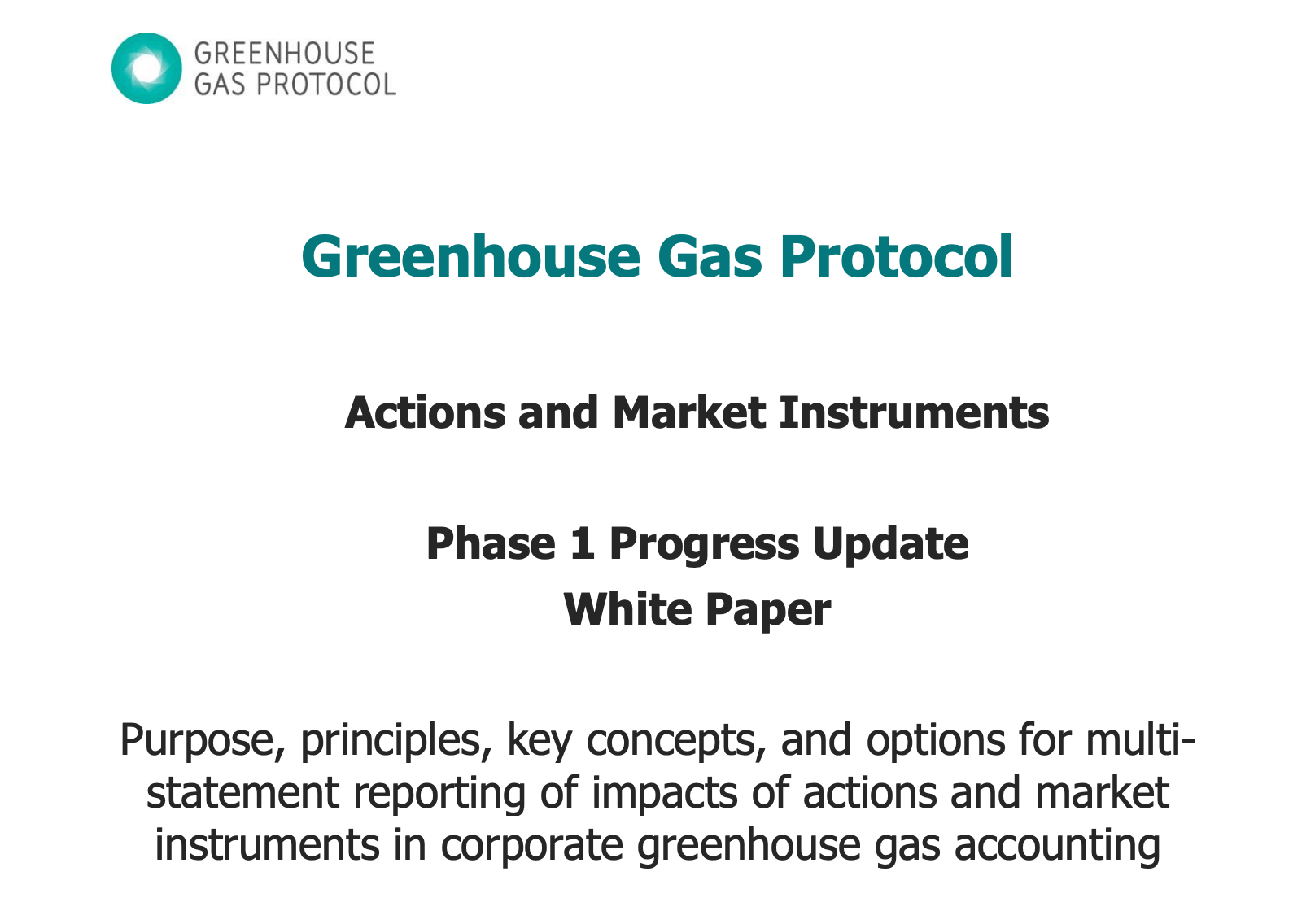
There has been more movement in the carbon accounting space in the last year than in the last 20 years! Continuing that trend, the GHG Protocol (GHGP) recently released a new white paper on its Actions and Market Instruments (AMI) standard-setting process. The AMI is designed to enable companies to accurately measure and report emissions mitigation beyond the company's operations and direct supply chain.
The white paper introduces a multi-statement reporting structure to supplement, not replace, physical inventory. Acknowledging that different accounting methods provide different information and serve different purposes, a total of four statements are under consideration for the multi-statement reporting structure:
Physical GHG inventory
Market-based GHG inventory
GHG impact statement
Non-GHG indicators
The 60-day comment period closes May 31st, ahead of a final draft in 2027.
5. Lawsuits vs. Oil and Gas Majors
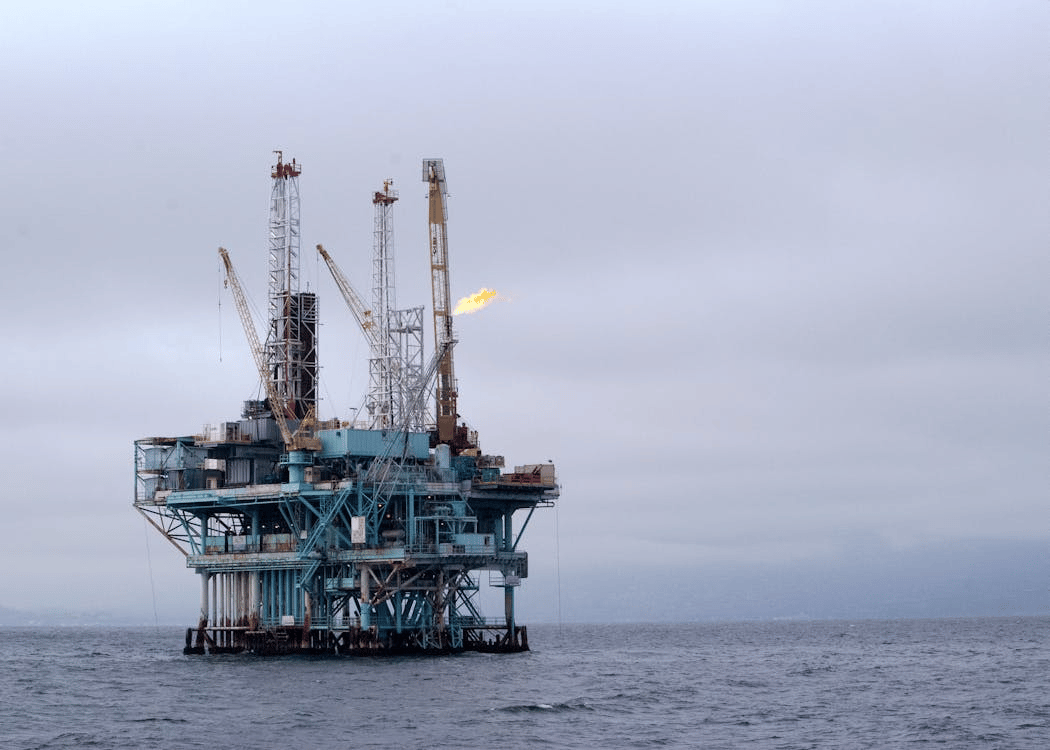
Two lawsuits this week against leading oil and gas firms could set long-term precedents:
The Dutch non-profit Friends of the Earth Netherlands, known as Milieudefensie, has opened another chapter of its long-running legal feud with Shell. In this most recent case, Milieudefensie is attempting to stop Shell from drilling new oil and gas wells, claiming it would conflict with international climate agreements
In the US, a group of environmental NGOs has sued the Trump administration over its approval of a $5 billion BP deepwater oil and gas project. The suit alleges that the project is risky and an accident could be worse than the Deepwater Horizon spill.
In a related case, a federal judge issued a temporary injunction against the Trump Administration's restrictions on wind and solar projects. The judge said that the suit alleging unlawful discrimination against wind and solar power would likely prevail.
The views expressed on this website/weblog are mine alone and do not necessarily reflect the views of my employer.
Other Notable News:
ESG Reporting
Corporate Sustainability
Global Weirding
Scope 2
Trump 2.0