
ISSB Passporting Builds Momentum



What’s in this week’s newsletter:
ISSB passporting boosts adoption of sustainability standards
Renewables surpass gas in the US despite political backlash
AI data centers spark growing local resistance across America
Tom Steyer makes the economic case for climate action in California governors race
Warming oceans and wildfire risks raise El Niño fears
The International Sustainability Standards Board (ISSB) expects at least 10 more jurisdictions to adopt its standards this year. This was revealed in a speech transcript published by the ISSB, delivered by its Chair, Emmanuel Faber.
The speech was from the ISSB’s April meeting, where the group’s big announcement was its controversial stance rejecting a standalone nature standard.
Faber asserted that sustainability disclosures are important, even when some say “ESG is a thing of the past.” He argued that geopolitics and AI have made the need for resilience even more acute, adding that “a tool that allows companies to express their…ability to thrive in a complex world is even more a topic for today than it was in the past.”
The most notable revelation was ISSB’s claim that more than 50 jurisdictions will be committed to using, or already use, the ISSB standards as their disclosure baseline by next year. These new additions include Peru, Ethiopia, and Oman.
Faber said a critical part of the ISSB’s growth is the introduction and expansion of the concept of passporting - a program spearheaded through their jurisdictional adopters working group of 40 jurisdictions, including China. The group’s goal is to increase ISSB adoption through a “seamless language” to improve comprehension and comparability.
2. US Renewables Continue to Thrive
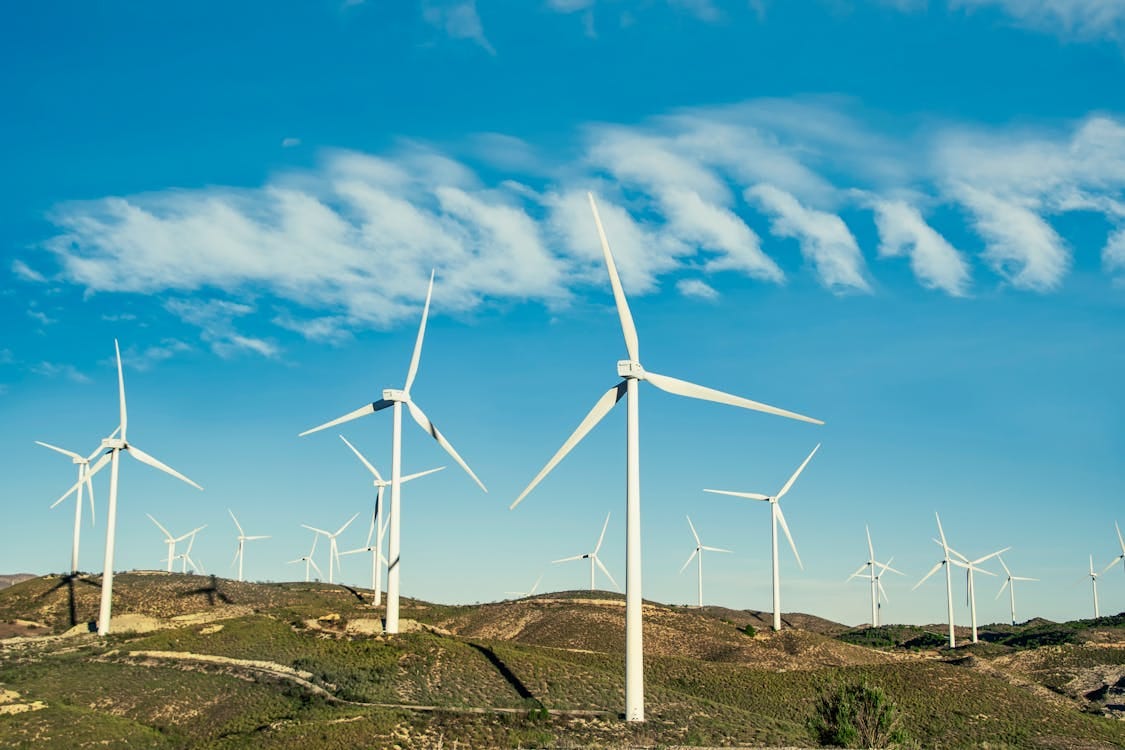
The anti-renewables policy under the Trump Administration has blocked wind projects and cut the tax credits that drove the energy transition. However, it’s becoming increasingly clear that the Administration’s plans to block renewables are not coming to fruition.
In March, renewables produced more energy in the US than gas for the first time on record. “The State of Renewable Energy Dashboard,” released this week, revealed that renewables have tripled over the last 10 years and that more than 30 states now have at least 10% renewables in their energy mix. Aligned Climate Capital CEO Peter Davidson said, “There is no truth to the death of the clean energy industry in the United States – in fact, just the opposite.”
Opposing this trend, the US Secretary of Energy Chris Wright said, “I’m pretty confident coal will lead the world in global electricity production when I die.”
Taking the other side of that bet, a New York pension fund threatened to remove its (small) investment in French energy company Total Energies for accepting Trump’s $1 billion to halt work on an offshore wind farm.
On a global scale, the Iran war has prompted many countries to accelerate renewable energy, and even NATO backs renewables as a solution to energy security, despite US skepticism. All of this led one reporter to call it “Trump’s Green New Deal.”
3. Data Center NIMBYism

US energy consumption is rising, with electricity demand projected to increase by 1.3% in 2026 and over 3% in 2027, largely driven by AI data center expansion and electrification. The EIA forecasts that commercial sector electricity demand will surpass residential demand by 2027, with total power consumption reaching new records in 2026.
A backlash is growing among residents angry about rising energy and water bills. Environmental and noise complaints could stifle growth in some states. Currently, $64 billion worth of projects are tied up with planning hurdles, and NIMBY-ism (Not In My Backyard) is one of the main reasons.
New flashpoints are erupting daily, like Maryland’s push back on $2 billion of taxpayer-funded out-of-state grid enhancements linked to AI-driven data centers. And one of the biggest approved projects to date, the Stratos data center in Utah, has been called ‘irresponsible‘ due to its scale. The project is set to be double the size of Manhattan Island and use more energy than the entire state.
4. California’s Climate Governor?
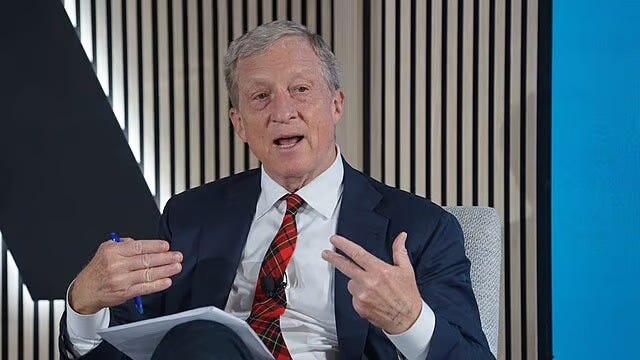
California Governor hopeful Tom Steyer
The California gubernatorial race is heating up with a broad field of candidates from both parties. One of the current frontrunners is billionaire and climate advocate Tom Steyer. Steyer is running on a climate-centric platform. However, instead of approaching it from a planetary-emergency standpoint, Steyer is framing climate action under the umbrella of affordability. In this NYT interview, he explains why clean energy is an economic imperative.
On the other end of the spectrum, the Republican with the highest potential for votes, Steve Hilton, has vowed to ‘scrap’ all of the state’s climate policies.
5. Wildfires and Warming Oceans
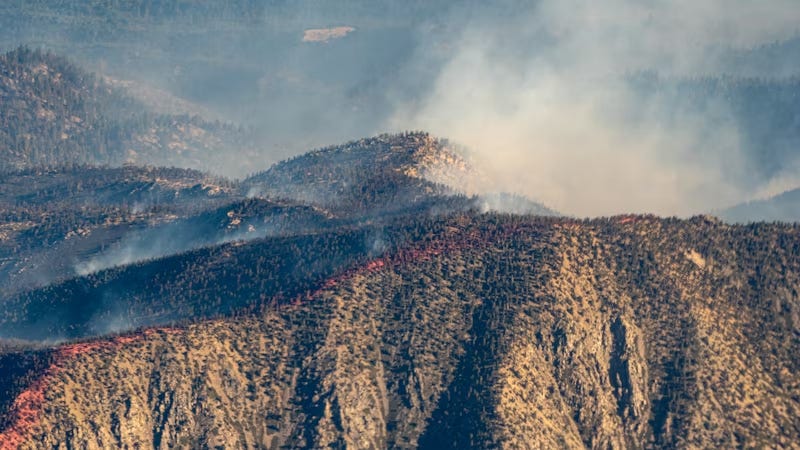
April 2026 had the second-highest surface sea temperatures of any April since records began, and scientists warn this is the strongest sign of an impending El Niño. The last time ocean surface temperature records were broken in 2024, it was the hottest year on record and had some of the most costly extreme weather events to date.
Climate-driven drought conditions in Oregon, Washington, Florida, and Georgia are already causing widespread wildfires. Scientists warn that droughts, wildfires, and floods are likely to be amplified as El Niño approaches.
The views expressed on this website/weblog are mine alone and do not necessarily reflect the views of my employer.
Other Notable News:
Sustainability Research
Climate Risks
Climate Litigation
Sustainability Hero
Environmental legend David Attenborough celebrates his 100th birthday this week. To commemorate the occasion, the NYT has produced this photo album.
Notable Podcasts:
In this week’s episode of Two Steps Forward with Joel Makower and Solitaire Townsend, the pair digs into the State of Sustainability Report. They discuss how the survey reveals a profession under pressure, and how doing inner work and soul-searching could be a way out.
In the most recent edition of Bloomberg’s Zero podcast, they discuss how electrification could bring about an era of global stability. Host Akshat Rathi speaks with former Chief of Staff to Canadian Prime Minister Justin Trudeau - Gerald Butts - about what the world looks like after the green transition and whether the same supply chain and geopolitical risks will remain.