
How Adaptation Became a $1.3 Trillion Opportunity


What’s in this week’s newsletter:
Climate adaptation becomes a $1.3 trillion investment opportunity
TISFD releases the first draft of its social disclosure framework
Sustainability momentum continues despite backlash
The UN backs the ICJ’s landmark call to action on climate
Europe faces a carbon credit integrity scandal
Amid geopolitical and economic turmoil, the climate crisis has fallen down the totem pole of public awareness. But nature does not care about the news cycle, and this week we had some stark reminders of who is in charge…
Deadly heatwaves across Europe and the UK broke the record for May heat. A forecasted Super El Niño has nations scrambling to prepare. Most hope that improved resilience practices will mitigate the worst impacts of El Niño, and a new report finds that 92% of UK homes will need to adapt to avoid overheating.
The failure to adequately curb emissions has led to the disasters that climate scientists have been warning about for decades, and now adaptation to this new reality is essential. But this reality has also opened new climate investment opportunities - as reported by Bloomberg this week - and the magnitude is astounding:
Adaptation is a $1.3 trillion investment opportunity, with major, capex-intensive flood-defense engineering projects in cities from Tokyo to Nairobi becoming big business.
Tech-enabled startups are developing a variety of solutions with the overall adaptation sector pulling in $5.5 billion of equity funding last year, doubling its share of climate finance since 2021.
The potential returns of adaptation are well documented. BCG released a report last year finding that adaptation investments could return $19 for every dollar invested, and CDP confirmed this with an estimate of a 21x ROI.
Asia is taking the lead with adaptation and resilience investments now at $100 billion. And while 90% of that investment came from the public sector, increasingly, private equity is moving in.
Jay Koh, co-founder of an adaptation investing group, said, “What you’ve seen is an increasing recognition accelerating over the course of the last 18 to 24 months of real investor awareness.” Adding that while adaptation accounts for only 5% of climate funding today, these investments are looking more attractive because of both the returns and the fact that they are not as politicized as renewable energy investments.
2. TISFD
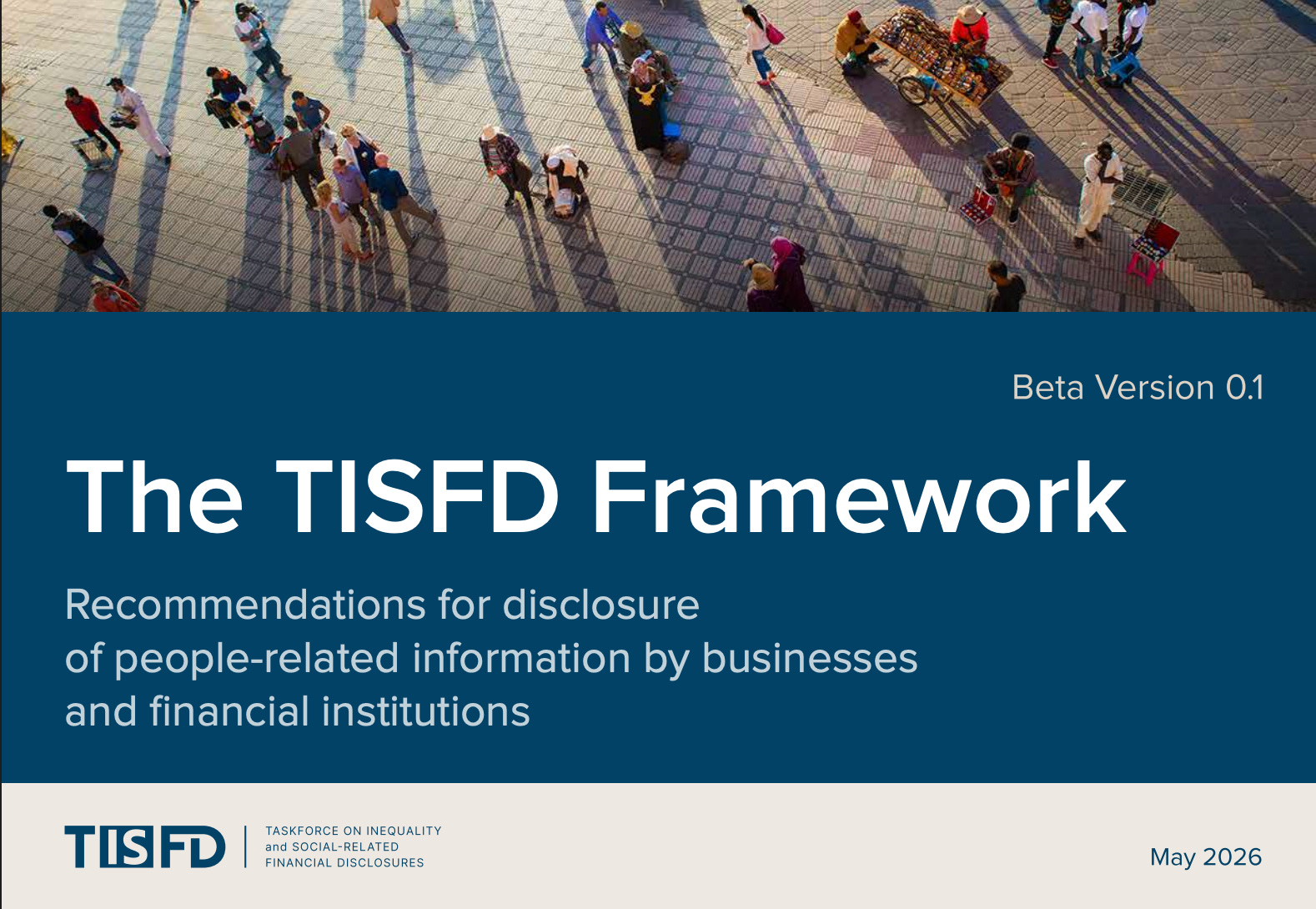
First, it was the Taskforce on Climate-related Financial Disclosures (TCFD), then the Taskforce on Nature-related Financial Disclosure (TNFD). Now the focus has turned to social disclosures. The Taskforce on Inequality and Social-related Financial Disclosures (TISFD) released the first draft of its standard this week to help companies identify and disclose people-related impacts, dependencies, risks, and opportunities.
The new framework follows the same four pillars from its predecessors: Governance, Metrics and Targets, Strategy, and Impacts and Risk Management. Three important elements of this new standard:
It is built to work in harmony with the International Sustainability Standards Board (ISSB) Standards, the GRI Standards, and the European Sustainability Reporting Standards (ESRS), thereby reducing fragmentation.
It can be used as a standalone standard or a complement to existing standards to reduce duplicative work.
It is designed to reflect the interconnections among people, climate, and nature, and to support linkages between the TCFD and TNFD.
You can help shape this standard through the interactive platform, which is open until July 31st. The final framework is expected to be released in late 2027.
3. Sustainability Reporting Momentum Continues Despite the Backlash
This Reuters article from this week highlights a trend we have been tracking for the last couple of years. Despite the much-discussed backlash against climate and sustainability in the US, Europe, and some other countries, the global trendline toward sustainability continues.
The article cites an Osapiens report showing that 9 in 10 companies that fell out of mandatory reporting in Europe will continue or expand reporting; the continued acceleration of voluntary reporting under the CDP and other frameworks; the momentum behind the ISSB; and other signals indicating the global trend lines toward sustainability are remarkably resilient.
New data released this week from CDP showed that US-based reporting companies massively increased the maturity of their climate reports in recent years: The number of companies adopting a voluntary climate goal ratified by the Science-Based Targets initiative (SBTi) tripled since 2020, climate scenario analysis increased by 80% since 2021, and many companies have expanded their disclosures into forestry and water reporting. CDP’s Chief Executive, Sherry Madera, said in a recent interview, “Companies don’t disclose because they have to, they disclose because there is a business reason to do so.”
4. Most of the World Backs Climate Action
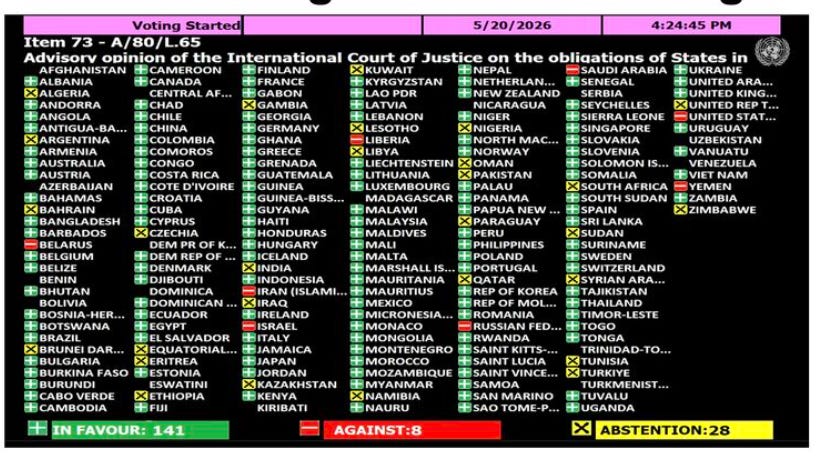
Last year, the International Court of Justice (ICJ) issued a unanimous advisory opinion, finding that nation-states have legally binding obligations to prevent climate change and protect the health of their citizens. This week, the UN’s General Assembly overwhelmingly (141-8) backed that finding. The eight nations that voted against were petro states like Saudi Arabia, the US, and Russia.
The resolution urges member states to take action to avoid the worst impacts of climate change and meet the goals of the Paris Agreement. UN Secretary-General Antonio Guterres called it a “powerful affirmation of international law, climate justice, science + the responsibility of states to protect people from the escalating climate crisis.”
Ahead of the vote, the Trump Administration urged nations to pressure Vanuatu, the small Pacific island nation that brought the resolution, to withdraw it. However, Odo Tevi the UN ambassador of Vanuatu - a nation being slowly swallowed by rising sea levels - said, “Upholding the court is essential for the credibility of the international system and for effective collective action.”
5. Europe’s Dubious Chinese Carbon Credits
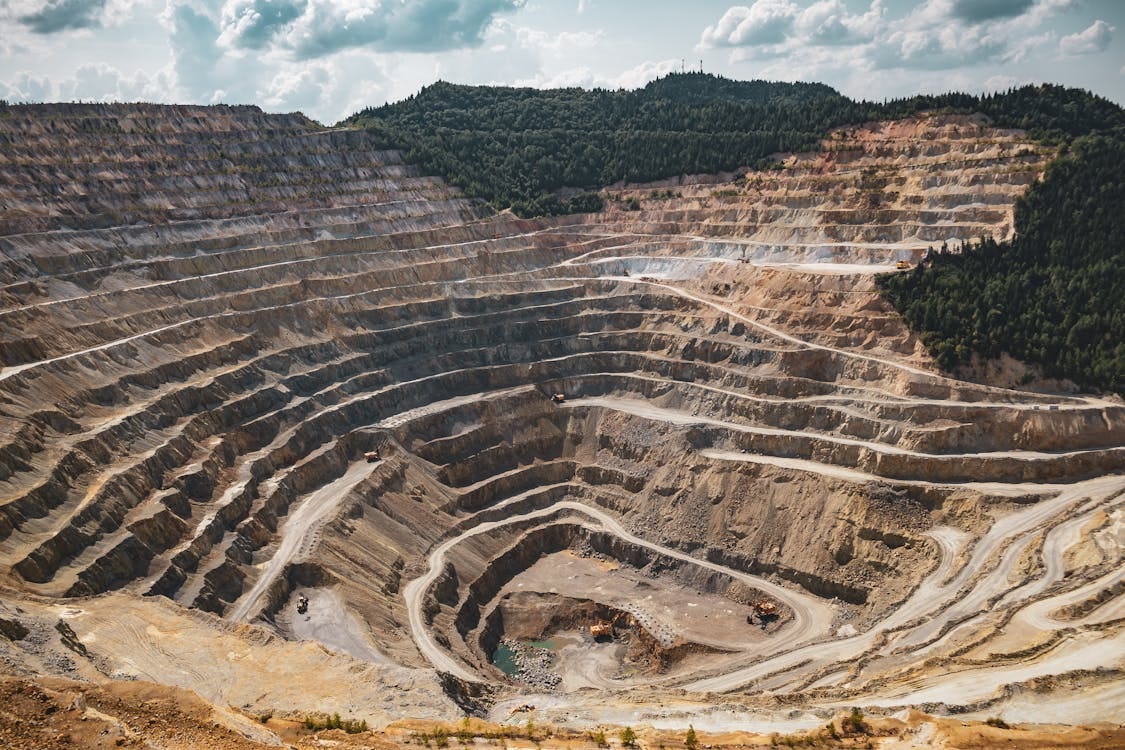
This week, Bloomberg reported that nine European countries bought 500,000 tons of carbon credits from dubious Chinese carbon capture projects. Companies in the Changqing oilfield claimed to offset hundreds of thousands of tons of carbon emissions. But when BloombergNEF investigated, either there was no operation at all, or the technology to capture carbon was not in place.
This is another blow to the integrity of the carbon credits market, but oversight and quality are improving in this vitally important mechanism for battling the climate crisis.
The views expressed on this website/weblog are mine alone and do not necessarily reflect the views of my employer.
Other Notable News:
Standard Harmonization
Fast Fashion
Trump 2.0
Climate Communications
Twenty years after the release of one of the most important climate documentaries ever, “An Inconvenient Truth,” Al Gore’s messaging has changed. As with many others, the argument has shifted from a moral to an economic one.
Emissions
Global Weirding
Climate Targets
Notable Podcasts:
This week’s edition of Two Steps Forward, by Joel Makower and Solitaire Townsend, warns that sustainability professionals should be ready for wildcards. They discuss how the profession is all about momentum and process, but few are prepared for shocks such as the upcoming El Niño or the data center backlash.
This week’s Carbon Accounting and Management podcast features an interview with Mike Hower. Mike shares his new book, “Sustainability Storytelling,” and goes into the “Four Cs” framework he developed for effective sustainability communication.