
Europe’s Omnibus Goes Global


What’s in this week’s newsletter:
EFRAG estimates that non-EU companies in scope fall from 10,000 to 1,200
UN report warns AI adoption is outpacing environmental governance
ISO launches a new net-zero transition standard for finance
CDP and TNFD advance nature-related reporting metrics
World Cup faces growing sustainability scrutiny
Want the full version of Sustainability Simplified? Every week, we share the full version with our email list first. Sign up here.
How the ‘Omnibus Simplification’ directive affects European companies subject to the Corporate Sustainability Reporting Directive (CSRD) has been clear since it was adopted earlier in the year.
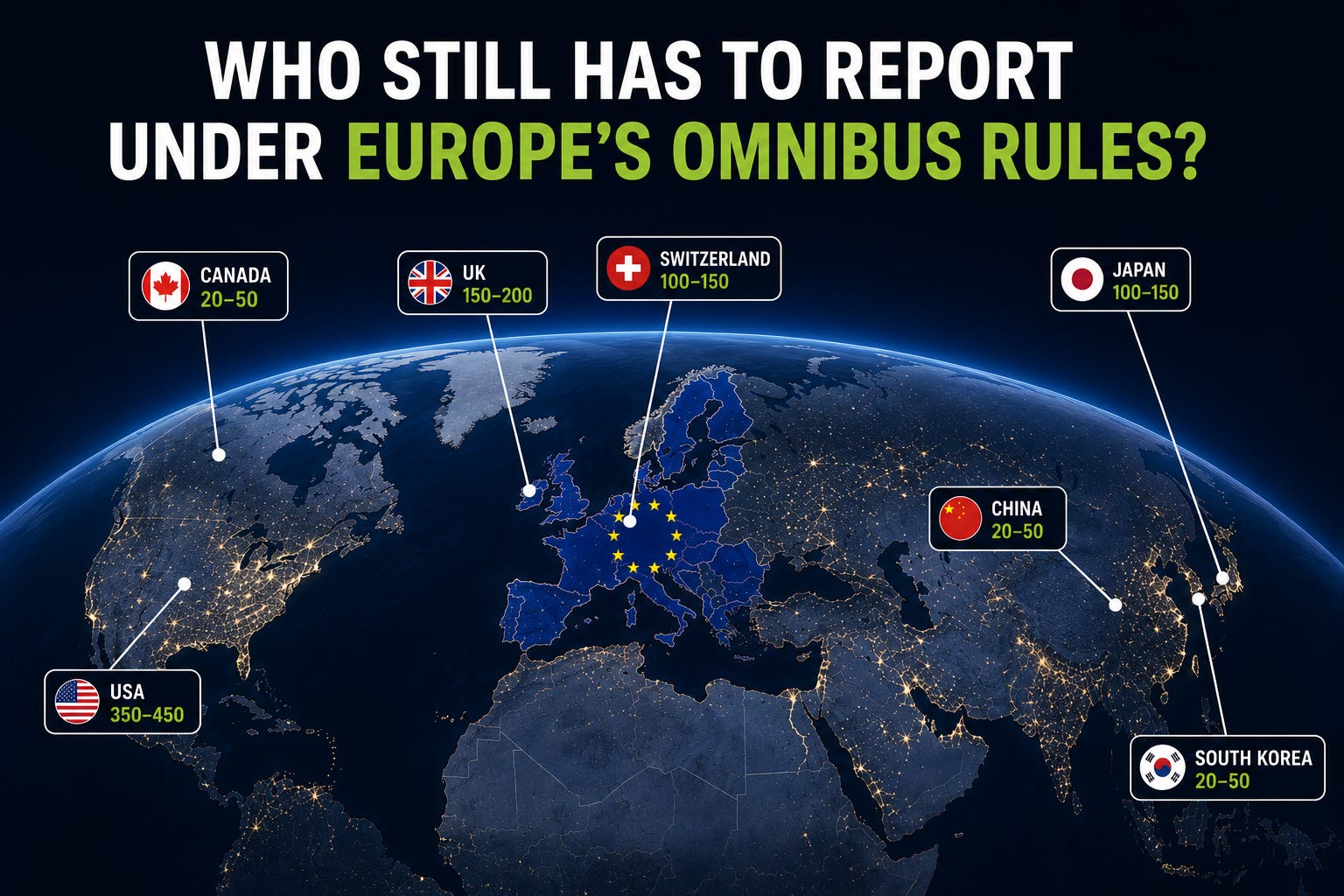
But how it impacts non-European companies remained less clear until this week. The European Financial Reporting Advisory Group (EFRAG) shared that the number of non-EU companies covered under mandatory reporting has been slashed by 90%. A breakdown of the company locations is in the infographic below. US companies dominate the list, but are down to 350-450 from the original estimates of 4,000 companies covered.
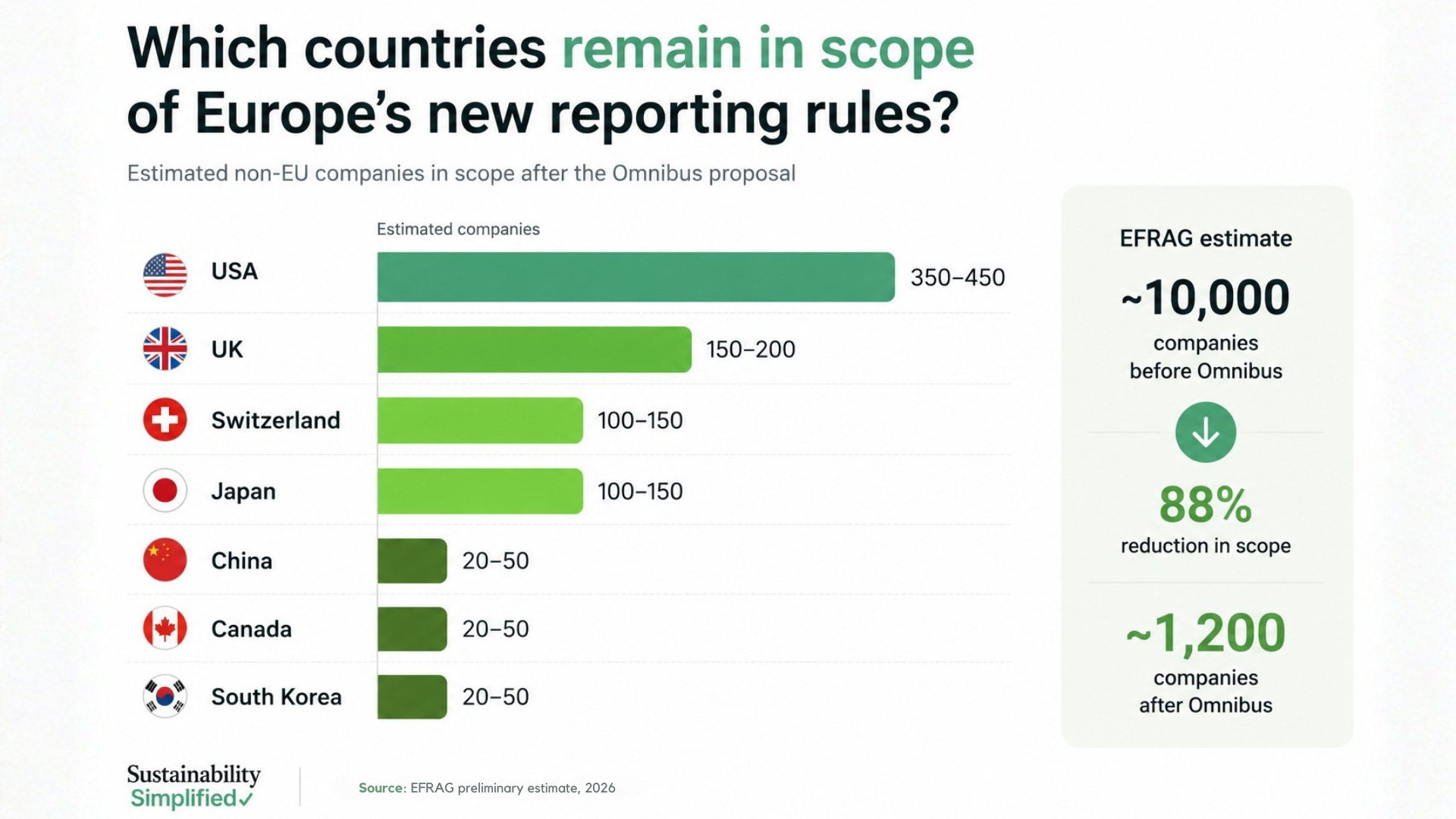
EFRAG’s breakdown of how many companies in each country will be impacted
Last week, EFRAG released an update announcing that it will resume development of sustainability standards for non-EU groups (N-ESRS). The update provides information on how they expect the N-ESRS to differ from the general ESRS, launches a call for interest from potential reporters to participate in a field test, and outlines a timeline for the standard, with a draft release in July, followed by a 100-day comment period.
This announcement from EFRAG comes as the comment period for the simplified European Sustainability Standards (ESRS) closes, where a growing chorus of European stakeholders has called for the ESRS to be more in line with international standards to simplify compliance and comparability.
One comment from Norges Bank Investment Management (NBIM), the manager for Norway’s sovereign wealth fund, requested that EFRAG allow reporters to be in compliance with the ESRS and International Sustainability Standards Board’s standards (ISSB) within one report. Similarly, in another comment from GRI, they asked for stronger alignment with other international standards to improve competitiveness.
2. ISO’s Net Zero Transition Standard For Finance
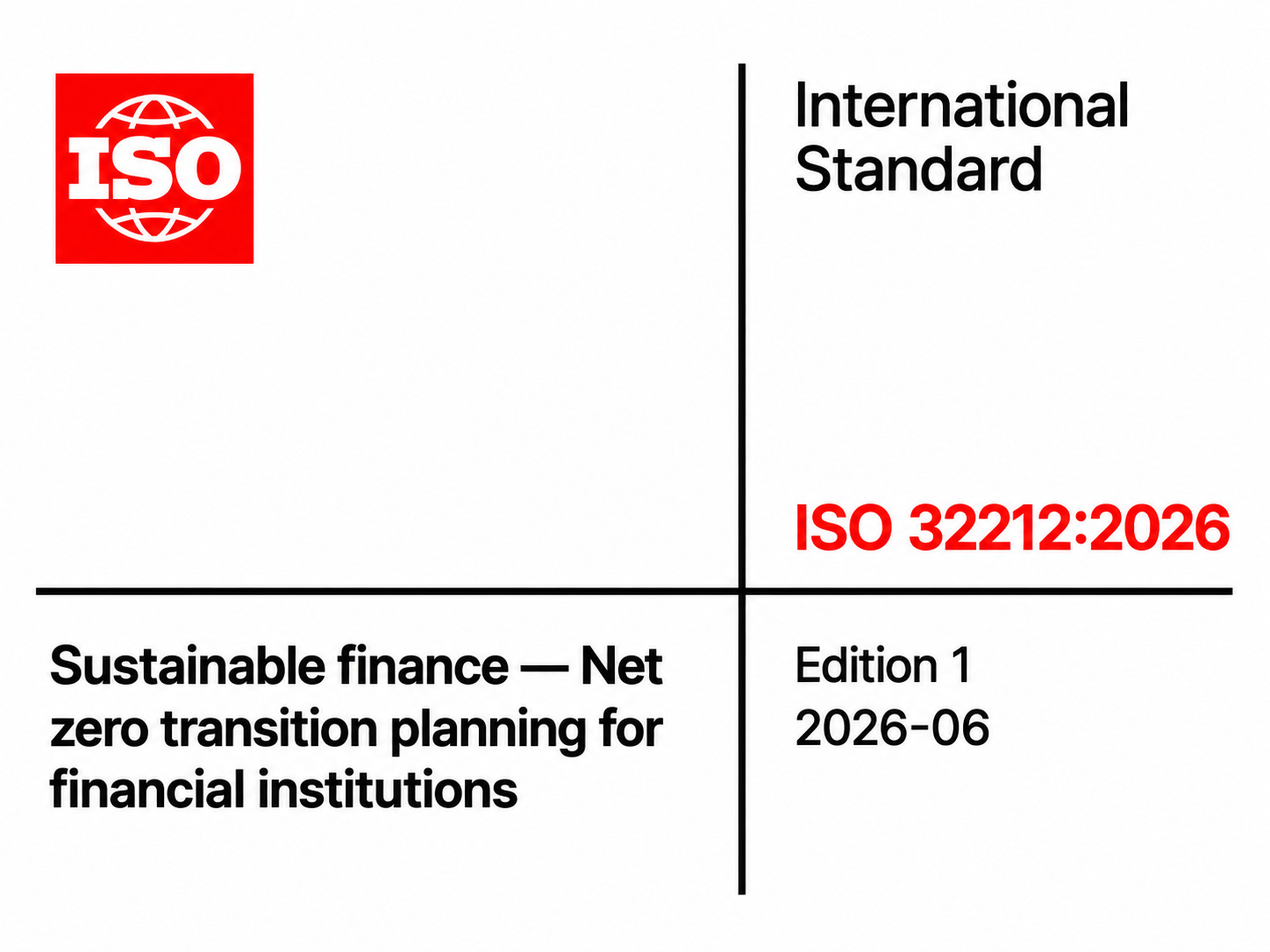
Last week, the International Organization for Standardization (ISO) announced a new landmark standard for helping the financial sector transition to net zero. The “ISO 32212, Sustainable finance — Net zero transition planning for financial institutions,” will provide financial institutions with the requirements and recommendations they need to conduct investing, lending, and other financial activities in line with net-zero emissions and to mitigate risks and capture opportunities.
Scott Steedman, Director-General, Standards at ISO’s UK member body, BSI, said, “Financial institutions have a pivotal role in the transition to a net zero and climate-resilient economy. ISO’s new international standard, ISO 32212, is a best practice tool developed with input from leading organizations across the financial sector and will be globally adopted by countries throughout the ISO membership.”
3. Standard Makers Advance Nature Reporting
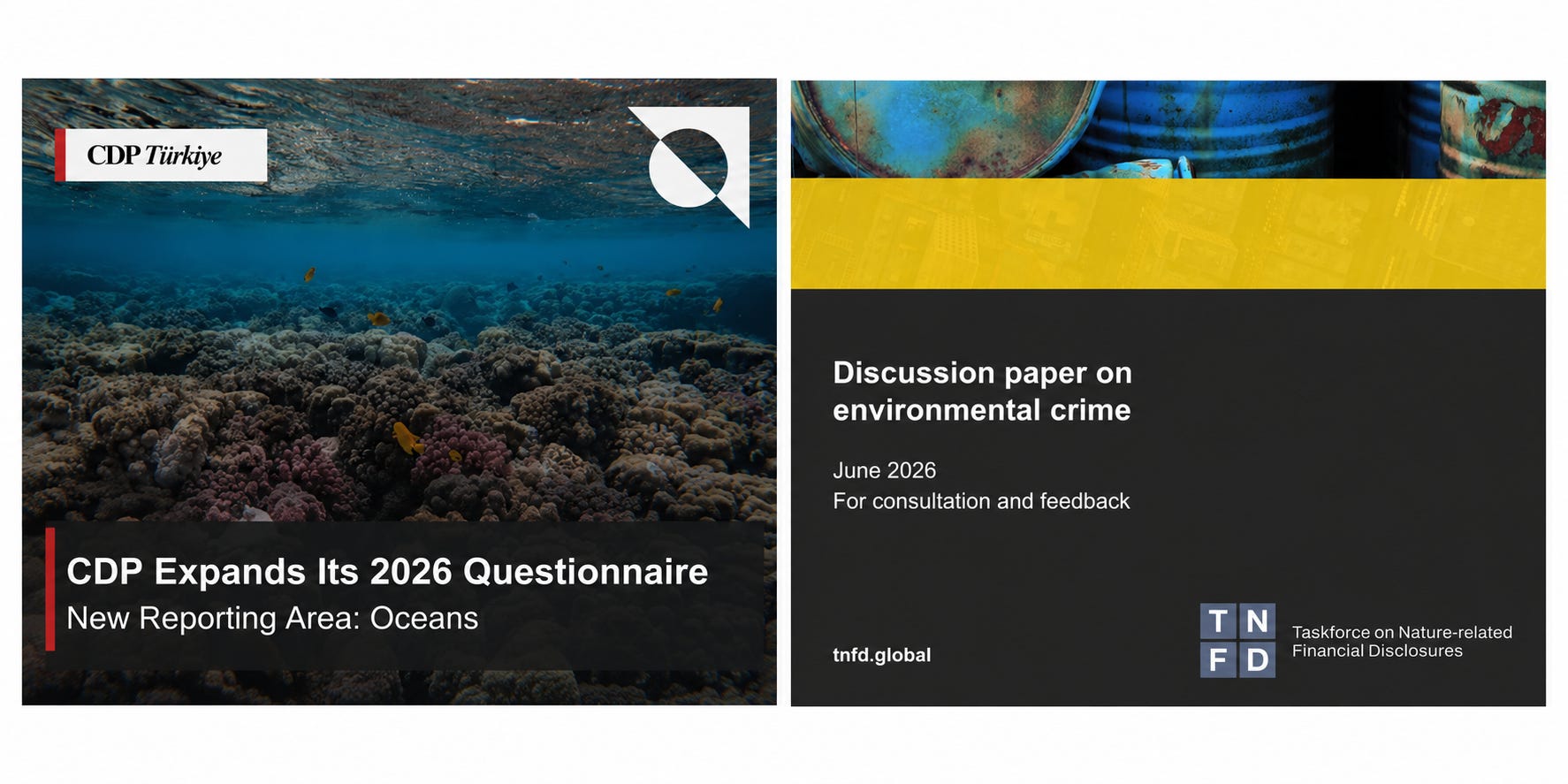
Nature continues to be an area of focus for sustainability standards, and there were two new developments this week:
The Taskforce on Nature-related Financial Disclosures (TNFD) issued a discussion paper on how reporting companies can include environmental crime in their nature assessments and disclosures. It aims to help companies identify illegal environmental activities in their value chain to better understand their impacts, risks, opportunities, and dependencies.
4. AI Adoption Outpacing Governance

This week, a damning new report from the UN revealed that the environmental and social costs of AI adoption are outpacing the governance structures needed to mitigate these risks. It found that by 2030, AI infrastructure will use energy equivalent to the needs of 650 million people, and occupy land twice the size of the megacity of Jakarta.
It also provides a series of principles that companies and policymakers can use to ensure AI adoption is sustainable, ethical, transparent, and equitable.
But it’s not all bad news, AI is enabling better environmental performance and simplifying reporting:
This new report from PwC revealed that the majority of investors and other public disclosure users are using AI to read and simplify reports. The report also provides guidance on how reporters can adapt their reporting to be easily accessible by AI readers.
5. World Cup Sustainability Woes

This week, the biggest global sporting event, the Soccer (Football) World Cup, kicks off in the US, Canada, and Mexico. This year has been controversial for many reasons, but environment-related issues have been hitting the headlines this week, leading up to the games.
Despite FIFA’s goal of halving emissions by 2030, a Greenly analysis found that this year emissions from the event will almost double Qatar’s in 2022, coming in at over 7 million tons of CO2e, the equivalent of 1.7 million cars’ annual emissions.
The views expressed on this website/weblog are mine alone and do not necessarily reflect the views of my employer.
Other Notable News:
Climate Investing
CDP
Energy Transition
Global Weirding
Trump 2.0
Notable Podcasts:
In this week’s episode of Bloomberg’s Zero podcast, host Akshat Rathi explores what 100 days of the Iran War have done to the global energy transition. Focusing on Asia, he claims that the continent is having its Ukraine moment and realizing how fragile its energy supply chains are, which is driving it to adopt renewables at a faster pace.
In this week’s edition of The Climate Question on the BBC, the presenters ask whether oppressive heat will affect this World Cup. It also explores the carbon emissions of this year’s event and how future sporting events can adapt to a warming world.