
🟢Europe Finalizes Sustainability Standards


What’s in this week’s newsletter:
Europe finalizes its new sustainability reporting standards, cutting requirements by 70%.
Europe still dominates global sustainability, with Japan the only non-European country in Yale’s top 20 for environmental performance.
The US is reshaping global climate policy, from the World Bank to EU methane rules.
The deadly heat this summer is harming Europe and North America, with more to come.
The GHG Protocol launches new Land Sector & Removals guidance and a request for information on Forest Carbon Accounting
Keep Sustainability Simplified free and independent. Make a pledge here.
Europe has taken its final major step in simplifying corporate sustainability reporting, with the EU Commission adopting the new Sustainability Reporting Standards (ESRS) – the standards that European companies must use to comply with the Corporate Sustainability Reporting Directive (CSRD).
The so-called ESRS Set 2, released by the European Financial Reporting Advisory Group (EFRAG) earlier in the year, is dramatically different from the first set of standards used by companies to comply with the CSRD in 2025. These newly adopted standards:
Have 60% fewer mandatory data points and no voluntary data points, resulting in 70% less in total.
Are estimated to save reporting companies 30% compared to the previous standards, in line with Europe’s goal to reduce the financial burden of compliance by 25%.
While the reductions in data points are significant, the European Commission claimed the standards strike a balance between reducing administrative burden and upholding the quality of disclosures.
The Commission also adopted a voluntary reporting standard for smaller companies (VSME standard). The VSME Standard allows companies to report voluntarily under a less robust standard. Crucially, it also limits the amount of information that companies subject to the CSRD can ask from smaller companies in their value chain.
The new standards also respond to calls for greater alignment with global reporting frameworks. For example, this open letter from The World Federation of Exchanges (WFE) has urged regulators to reduce fragmentation and move toward a “report once” approach. The revised standards support this by aligning more closely with the International Sustainability Standards Board (ISSB) sustainability reporting standards and the Greenhouse Gas (GHG) Protocol Corporate Standard. Companies can now report using any of the GHG Protocol's three organizational boundary approaches: financial control, operational control, or equity share, bringing ESRS into closer alignment with other major sustainability reporting frameworks.
Most pundits claim these rules strike a good balance between reducing the administrative burden and making disclosures more decision-useful for investors and other stakeholders. For companies that must report, as this BCG report shows, this can be an excellent opportunity to reset and move from compliance-driven reporting to more strategic reporting.
The delegated acts will be sent to the European Parliament and Council, which have 2 months to debate the standards, before they enter into force. Any further changes are unlikely at this stage.
2. Europe Continues to Lead the Way
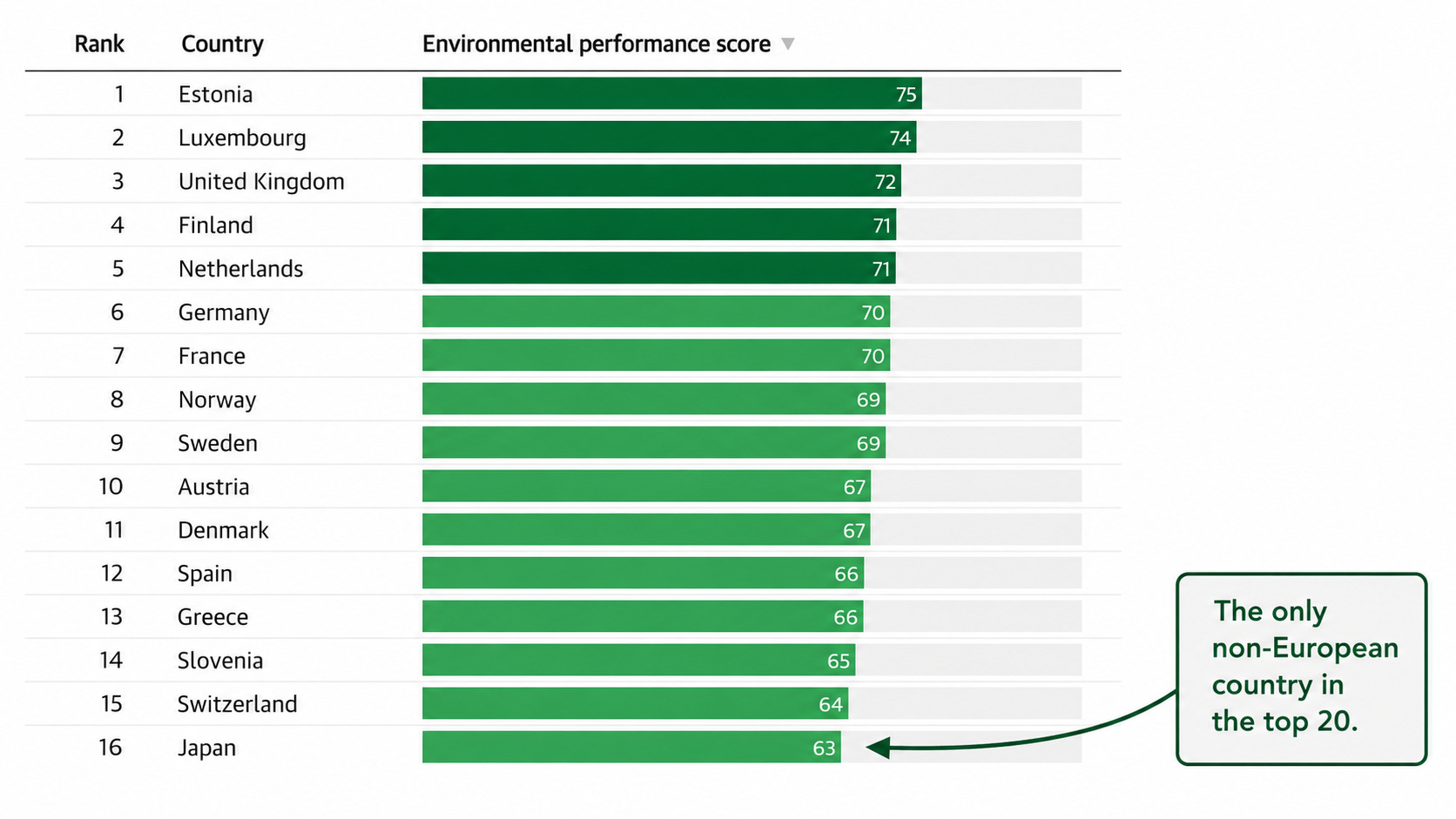
Despite European backtracking (or simplifying) many of their sustainability rules, they still perform best on environmental issues. Yale’s 12th biennial Environmental Performance Index (EPI) was dominated by European countries. Only one non-European country (Japan 16th) made it into the top 20 companies out of 177 countries judged on more than 50 environmental indicators.
While the reversal of major sustainability rules has hit the headlines, Europe continues to lead the way with new sustainability policies. Last week, it introduced new circularity requirements for the automotive industry and strengthened its Emissions Trading System by closing a loophole that allowed ships to reduce the carbon fees they had to pay by stopping at ports just outside the EU.
The European Court system is also leading the way. A Paris court recently made a landmark ruling, finding that the French oil and gas company TotalEnergies must develop and disclose a plan to reduce emissions from its products, known as Scope 3 emissions. The court ruled that TotalEnergie’s climate risks fell under France’s Corporate Duty of Vigilance law.
3. US Reshapes Global Climate Action

Unsurprisingly, the US fell to 27th in the Yale environmental index (above), as it continued to push an anti-climate-action agenda on the world. After intense lobbying at the World Bank, the global body decided to retire its target for having 45% of financing linked to climate “co-benefits.” The decision was made after France and other EU nations pleaded with the World Bank to keep the target, but the US, which holds the largest voting share at the World Bank, overruled them.
Europe is also under pressure from the US to weaken its methane rule. Germany’s energy minister, Katherina Reiche, has urged the EU to pause the implementation of the rule, which is set to expand to countries that import oil and gas to Europe - forcing them to limit flaring and methane leaks. Petro states, like the US and Qatar, say that would put Europe’s supply at risk.
The on-again, off-again war with Iran will also have long-lasting impacts on global climate action. In the short term, countries have revitalized waning coal-powered energy, with domestically produced coal replacing oil and gas amid supply shocks, but over the longer term, the trend is clear: countries want to wean themselves off oil and gas and transition to renewables, batteries, and electrification.
4. Deadly Heat Continues
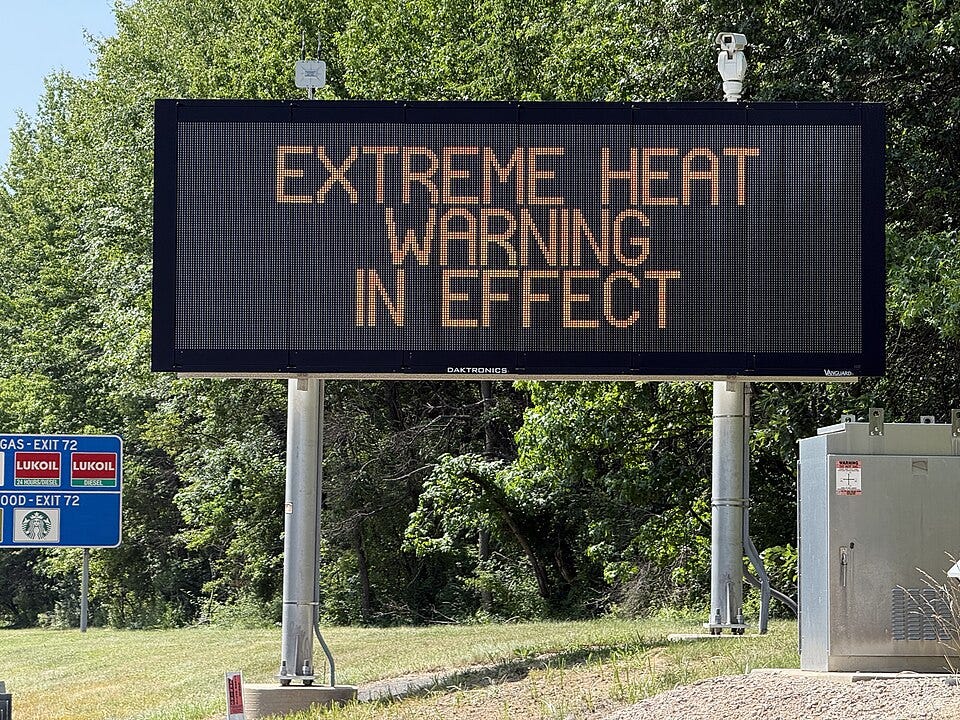
As in 2024, this year’s El Niño conditions are causing new record high temperatures, with deadly consequences. June broke the record for the warmest average sea temperature, pushing us into “uncharted territory.”
In Europe, the UK, France, and some other Eastern European countries had their hottest June ever. In France alone, the heat resulted in an estimated 1,000 deaths. In the UK, a national climate security force was established during London Action Climate Week.
In the US, more than 20 states baked with over 100OF (38OC) heat over the July 4th weekend, forcing some events to close, and resulting in at least 25 deaths. And forecasters predict the heat will continue to rise.
5. GHG Protocol Launches Land Sector and Removals (LSR) Guidance
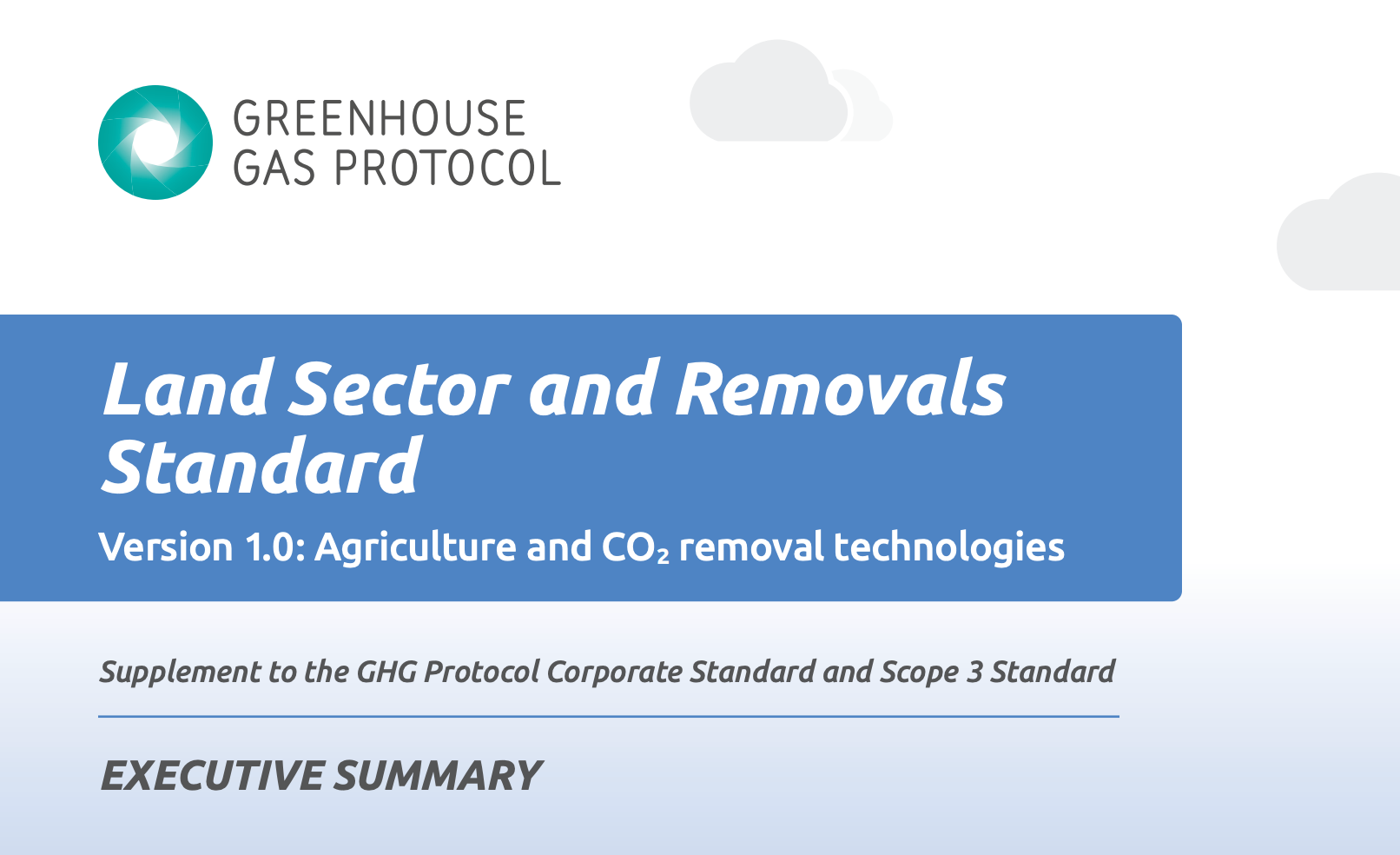
Last week, my company, the GHG Protocol, released a guidance document to support companies in implementing the Land Sector and Removals (LSR) Standard in their emissions calculations.
This companion piece was released to outline the accounting and reporting requirements of the LSR with worked examples, equations, calculation guidance, and 10 corporate case studies to see what it looks like in practice. The team also released an LSR reporting template and a reporting checklist
Also announced was a Request for Information for a new forest carbon accounting standard, which is open until February 1st, 2027.
The LSR Standard and Guidance will be available for companies to use from January 1st, 2027.
The views expressed on this website/weblog are mine alone and do not necessarily reflect the views of my employer.
Other Notable News:
Trump 2.0
Global Weirding
Sustainability Research
New research shared by a friend of the newsletter, Andreas Rasche, reveals that more in-depth sustainability reporting invites greater public scrutiny, showing that the value of reporting goes beyond reputation management.
Climate Reporting
London Climate Action Week
Notable Podcasts:
In this week’s edition of the Outrage and Optimism podcast, the hosts are retelling their experiences from London Climate Action Week. The main topics of conversation were the extreme heat that disrupted the event and a commitment from 41 major cities to push back against AI infrastructure.
This week’s edition of The Rest of Politics features an insightful interview with Europe’s Energy Minister, Dan Jørgensen. In a wide-ranging interview, Jørgensen explains why clean tech is increasingly important, both economically and from an energy security perspective.