
🟢 Europe Finalizes Its Deforestation Rules


What’s in this week’s newsletter:
Europe finalizes the world’s first deforestation regulation
Should fossil fuel companies be held responsible for Scope 3 emissions?
Canadian wildfire smoke brings the US severe health implications
Inside Trump’s lobbying for more oil and gas production
Australia’s solar and battery boom is making electricity free
Keep Sustainability Simplified free and independent. Make a pledge here.
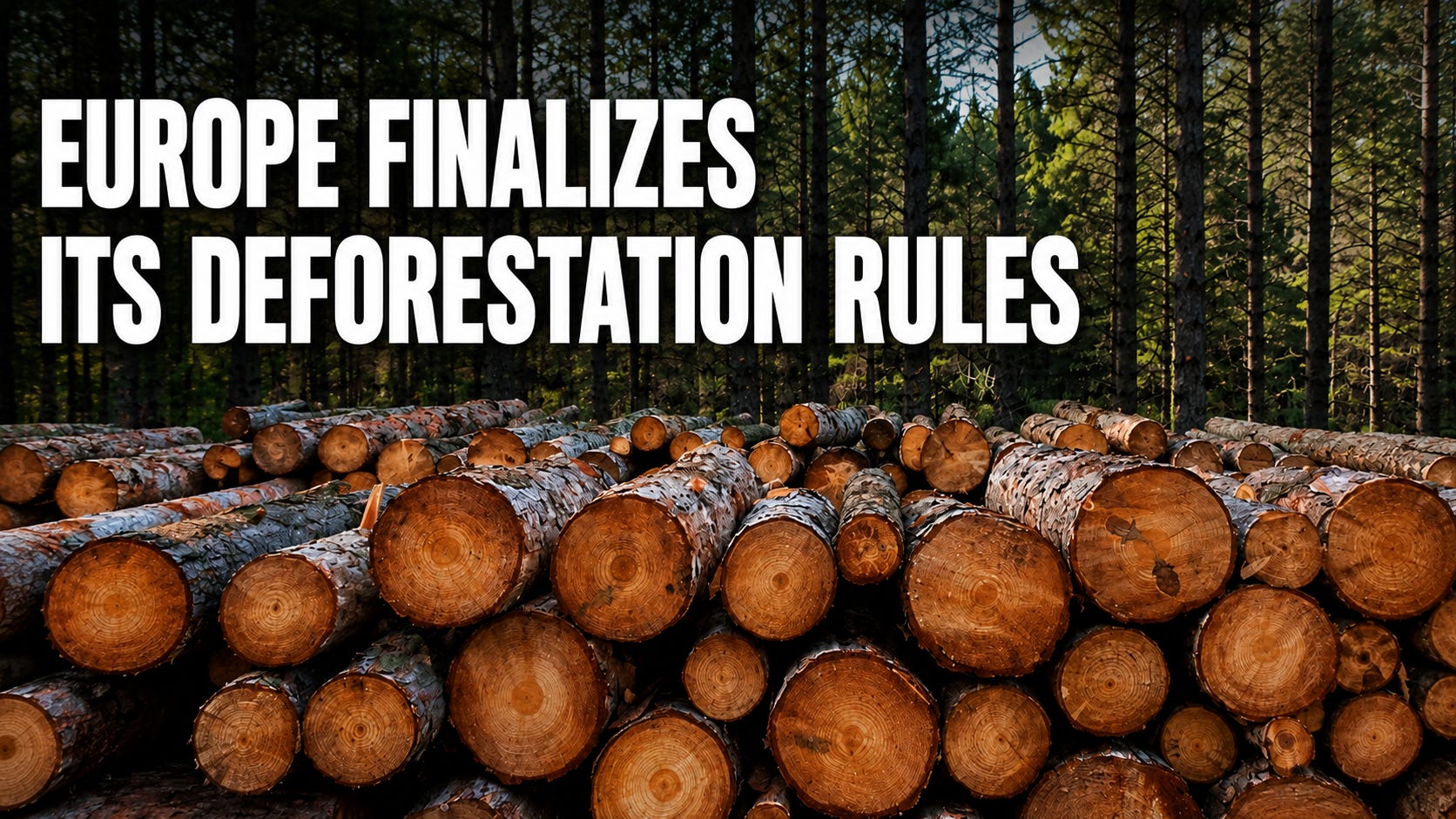
Delayed for a year at the end of 2024, then for another year in 2025, Europe’s Deforestation Regulation (EUDR) has finally reached its final form and will be adopted on December 30th, 2026.
This week, the EU Commission released a Delegated Act, which sets out a simplified list of covered products, and an Implementing Act that will provide guidance for submitting due diligence and declarations.
The EUDR requires companies selling commodities such as coffee, palm oil, cocoa, cattle, rubber, soy, and wood into Europe to prove that their products did not cause deforestation after 2020. The simplified rule omits products such as leather, soybeans for sowing, retreaded tires, and other automotive products. It also adds new products, like soluble coffee, certain palm oil derivatives, and - strangely - “frozen cattle tongues”, and gives companies importing these newly added products an additional year (December 30th, 2027) to comply. It also provides exemptions for specific medicinal, packaging, and second-hand products in line with Europe’s competitiveness and circularity goals.
The finalization has been widely applauded after years of uncertainty, delays, and changes. This final edition provides companies that export and import these products with clarity on how to prepare. Béatrice Wedeux at the WWF said, “Despite continued efforts to weaken the EU Deforestation Regulation, this decision should mark the end of legal and political uncertainty around the EUDR.”
As is usually the case with European sustainability regulations, they become a template for other jurisdictions. For example, since Europe introduced the world’s first carbon border tariff, the Carbon Border Adjustment Mechanism (CBAM), in 2025, at least 11 other countries have begun developing similar measures.
The UK has become the first country to follow Europe’s lead by announcing its own deforestation rule last month at London Climate Week. The UK rule will broadly replicate the EUDR and be phased in from 2027.
2. Fuel Companies Found Responsible For Consumer Emissions
As excess deaths linked to the unprecedented heat across Europe and the US over the last two months continue to mount, the reverberations of a landmark ruling by a Paris Court against the French energy company TotalEnergies seem more pertinent than ever. The ruling requires TotalEnergies to identify and address its downstream emissions and publish a new climate risk and mitigation plan for its supply chain within six months. The Court will assess the plan’s adequacy in January 2027.
The implications of the ruling go far beyond TotalEnergies, as it was issued under France’s 2017 Duty of Vigilance Law, which requires certain large companies to identify, prevent, and mitigate serious human rights violations. Meaning other French and non-French oil and gas companies, as well as other companies, will be required to consider their downstream emissions under the Vigilance Rule. The French court’s decision could also serve as a precedent for other courts in Europe and beyond.
In a similar story, the first-ever US lawsuit holding oil and gas companies responsible for heat-related deaths in a 2021 Pacific Northwest heatwave will proceed toward trial. An Oregon county is seeking $50 billion in damages for damages in the same heatwave, claiming the leading US oil and gas companies are responsible for almost 70 deaths.
These lawsuits are part of a global trend to hold oil and gas companies responsible for the downstream pollution (Scope 3) created by their products. These cases are setting precedents similar to the massive payments for damages caused by the sale of tobacco and opioids that reshaped those sectors.
3. Canadian Wildfires Blot out the Sun

Pittsburgh’s skyline obscured by smoke today
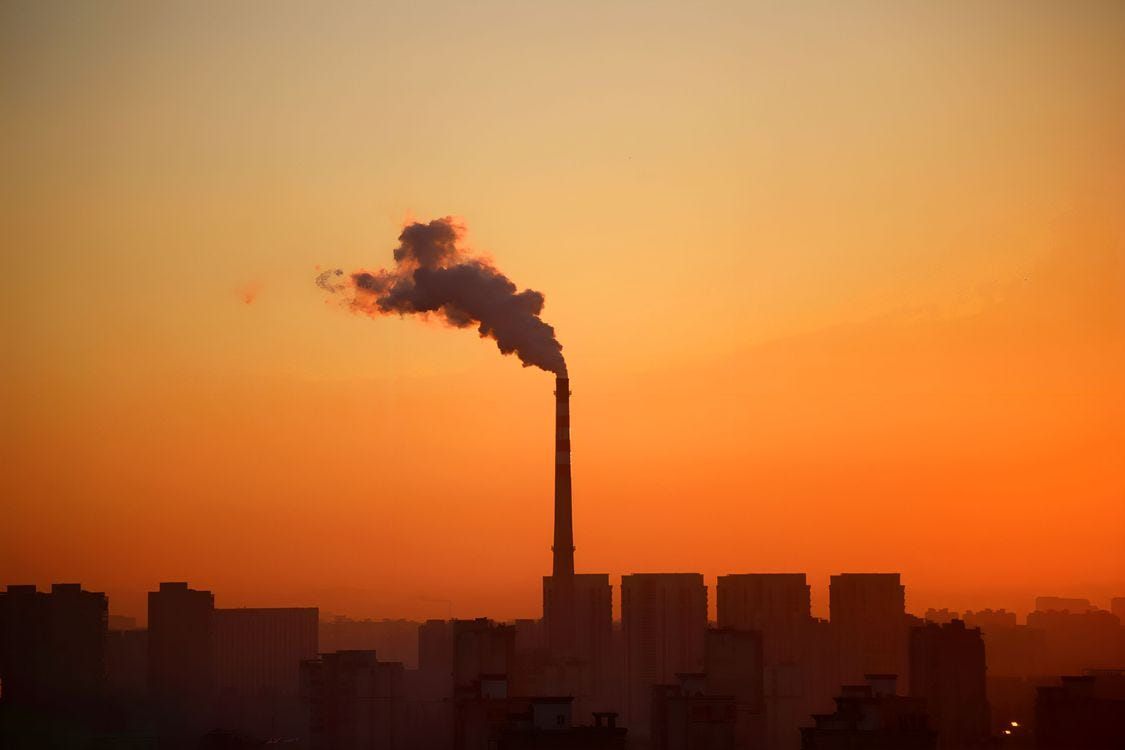
Skies turned orange, and air pollution reached dangerous levels across cities in the Mid-Atlantic North America this week as wildfires burned in Ontario. Waking up this morning, I could barely see out of my own window in Pittsburgh (image above) as the sky was blotted out and a campfire smell hung in the air. The story was the same in cities from Detroit to Toronto and New York.
Residents were urged to stay indoors as air pollution levels reached dangerous levels, a result of more than 800 fires in Canada. Experts say the fires, which last peaked during the last El Niño in 2023, are exacerbated by a warming climate.
Studies have linked wildfire smoke with higher rates of heart attacks, strokes, and cardiac arrests, increases in emergency room visits for asthma, and weakened immune defenses. The poor air quality is expected to persist across the weekend and could potentially disrupt the New Jersey World Cup final.
4. The Trump Administration and Oil and Gas Companies

President Trump at an Oil and Gas Roundtable
A remarkable insight into the inner workings of the Trump Administration and its approach to the oil and gas sector came from a new book: “Regime Change: Inside the Imperial Presidency of Donald Trump.“
The New York Times reported that oil and gas company executives were invited to the White House and asked to increase exploration and extraction. Allegedly, Administration officials offered new Executive Orders to cut through any regulatory obstacles.
The reporting also alleged that oil and gas executives worked with the Justice Department to block Vermont and New York's ‘climate super fund’ policies - requiring oil and gas companies to pay for climate damages. The book detailed how the Administration increased tariffs on Europe to pressure it to reduce sustainability rules that apply to US-based firms.
This week, the Administration reduced the size of two Utah national monuments by 3 million acres, opening them to oil and gas and mineral exploration. They also ended decades of wildlife habitat protections under the Endangered Species Act, allowing oil and gas and other companies to develop on previously protected land. As always, the final word on these actions will be decided by US courts.
5. Free Energy?
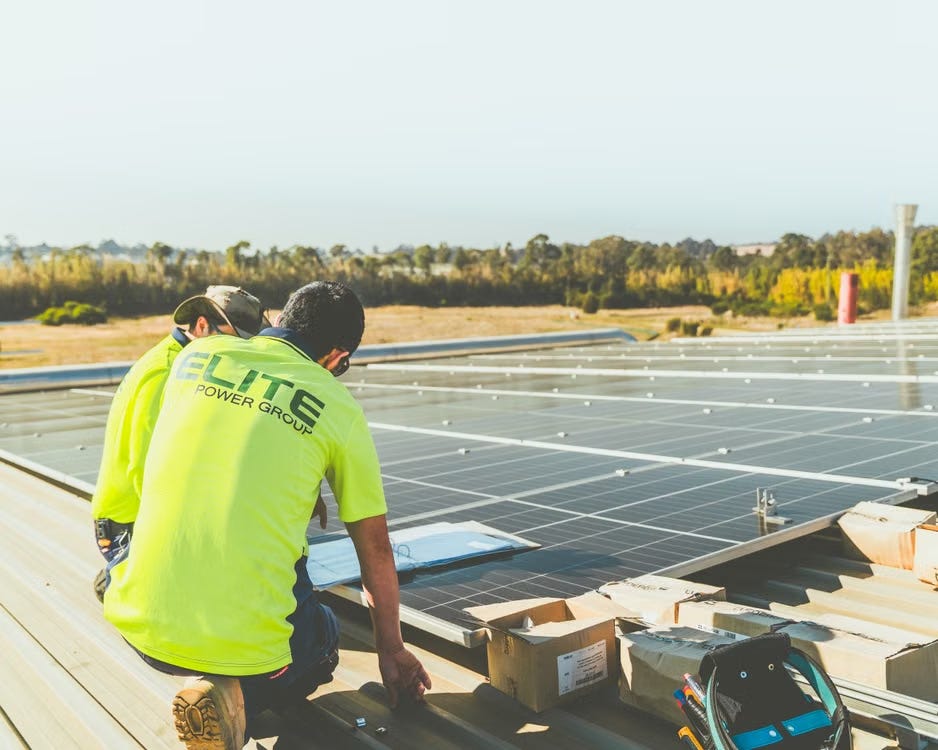
Free energy may seem like a utopian dream, but Australia has made it possible - at least for part of the day. Australia has implemented the Solar Sharer Offer (SSO). SSO offers free energy to households with smart meters for three hours a day. Australians have been using those three hours to charge their domestic batteries, electric cars, and to do other energy-intensive tasks.
The program has ignited a battery boom. The country of just 28 million people added battery capacity equal to 10% of the world's total in March this year, and Australia is now the third-largest battery importer after the US and Germany.
With a glut of renewable energy from household solar and the influx of batteries, the cost of electricity fell 12% in Q1 2026, driving energy bills down across the country.
Tim Buckley, of Climate Energy Finance, said, “Solar ate coal’s lunch, and now batteries are eating gas’s dinner.”
The views expressed on this website/weblog are mine alone and do not necessarily reflect the views of my employer.
Other Notable News:
Sustainability Regulations
South Korea announced this week that it has finalized its roadmap for International Sustainability Standards Board-aligned sustainability reporting rules, significantly expanding the number of companies compared to the initial proposals. It will be phased in, starting with 290 of the largest companies, and will expand dramatically in 2029 and again in 2030.
Sustainability Standards
AI and Sustainability
Corporate Net Zero Targets
Energy Transition
European Sustainability
Notable Podcasts:
In this week’s edition of the NYT’s Ezra Klein show, he spoke with climate activist OG Bill McKibben. The sprawling conversation touches on both the good and the bad of climate action. From the breakneck speed of the energy transition and abundance future, to the climate policy backlash from the US government.
In the most recent episode of Outrage and Optimism, the hosts ask why so much climate action is decided in the courts. They discuss some notable cases among the more than 3,600 climate cases currently filed in 62 countries and share some of both the big wins and losses in climate litigation.